Showing posts with label pasta. Show all posts

Tuesday, April 7, 2026

Foraging Aglio Orsino in Fiobbio and Using it Fresh Pasta with Friends

Some meals start in the kitchen. Others start in the woods.

Our day began with a walk near Fiobbio, a small village on the slopes of Monte Misma in the Val Seriana area above Bergamo. We’ve done several hikes in and around Misma. See: A Walk from Albino to Bergamo via Monte Misma, Monte Misma – Just Outside Our Window, and Le Vie di Misma - Trails 511 and 510.


Allium ursinum - a stand along the Lujo stream in Val Serian, Bergamo, Italy Walking to the Lujo stream in Fiobbio, Italy Ravioli with drops of bear garlic pesto
Left: Algio orsino (or bear garlic) growing along the Lujo stream.
Center: A walk in Fiobbio, Italy to collect algio orsino (Allium ursinum).
Right: Fresh ravioli stuffed with ricotta and aglio orsino, decorated with pesto made with aglio orsino.


From our friends’ house, we set out on foot toward the Lujo stream, baskets in hand and a clear objective: find aglio orsino (Allium ursinum), also known as wild or bear garlic.

Early spring is the moment for it. In damp woodland, the plant spreads in thick green carpets, announcing itself before you even see it. The air carries that unmistakable garlicky scent. Crush a leaf between your fingers and the smell intensifies instantly; a small chemistry experiment happening right there on the trail.

That chemistry is part of what makes aglio orsino so interesting. In the intact leaf, sulfur-containing compounds like alliin are stored separately from an enzyme called alliinase. When the leaf is cut or crushed, the enzyme converts alliin into allicin, the compound responsible for the sharp, pungent garlic smell. Allicin is powerful but unstable, and when heated it quickly transforms into milder sulfur compounds that soften the flavor.

This detail became important later.

After collecting a generous bundle along the stream, we made our way back, stopping briefly at Ca’ La Stongia before returning to Elena and Matteo’s kitchen. The plan was simple: fresh pasta and whatever we could make from the wild garlic we had gathered.

The kitchen quickly turned into a small workshop. Flour on the counter, eggs cracked into a well, dough kneaded and rolled through the pasta machine. We made two pastas: tagliatelle and ravioli. The ravioli were filled with ricotta and our freshly foraged aglio orsino, and dressed with a pesto made from the same leaves.

But first we did something that might seem counterintuitive for garlic lovers: we boiled the leaves briefly. The reason goes back to that chemistry. Heat disables the enzyme that produces more allicin and breaks down the allicin already present. The result is a gentler flavor—still garlicky, but greener and more rounded. Our friends had tried using the leaves raw the week before and found the result overpowering; a quick blanch made the ingredient much easier to work with.

Cooking together has its own rhythm. Someone rolls pasta while someone else shapes ravioli. Someone tastes the filling and adds a little more salt. Conversations jump from food to walks to whatever else comes up. Hours pass without anyone noticing.

In the end, the table filled with bowls of pasta: ravioli with ricotta and wild garlic, tagliatelle with pesto alla trapanese. Dessert followed—pastiera we brought to share and a colomba waiting on the counter.

It’s satisfying to eat something you’ve gathered yourself, but the real pleasure is the chain of events behind the meal: the walk through damp woods, the smell of crushed leaves, the small bit of chemistry that transforms a sharp plant into something delicate, and the shared work of turning it all into lunch.

Meals that start in the woods tend to taste better.


Photos


A door in Fiobbio, Italy Allium ursinum - flowers Allium ursinum - leaves
Left: Chiesa di Sant'Antonio da Padova in Fiobbio, Italy.
Center: Allium ursinum flowers (edible but we didn't use) in our pesto.
Right: Allium ursinum leaves.


Ca' del Stongia - fresh ricotta Ca del Stongia - selling pesto made from aglio orsino
Left: Fresh ricotta at Ca' La Stongia in Fiobbio, Italy.
Right: Selling pesto algio orsino: not thanks we are making it ourselves!

Lujo stream with stand of wild garlic Lujo stream in province of Bergamo
Allium ursinum (aglio orsino in Italian) growing alongside the Lujo (stream).

Pasta - rolling pasta with a pasta machine Pasta - making the ravioli filling Pasta - making ravioli stuffed with ricotta and bear garlic 
Making ravioli. Rolling out pasta. Making filling with ricotta and bear garlic (parboiled), and putting filling inside rolled out pasta dough.

Pasta - finished ravioli Ravioli decorated with priumla and violet
Fresh ravioli stuffed with ricotta and wild garlic. Ready to be boiled and plated with spots of wild garlic pesto and decorated with primrose and violet flowers. 

Pasta - fresh tagliatelle Tagliatelle con pesto alla trapanese
Tagliatelle was also made and served with pesto alla trapanese.

Wednesday, April 6, 2022

Orecchiette Pasta Dishes and Recipes for our Favorites: Radish Pesto and Tomato-Broccoli

Background | Radish Pesto Recipe | Tomato and Broccoli Recipe

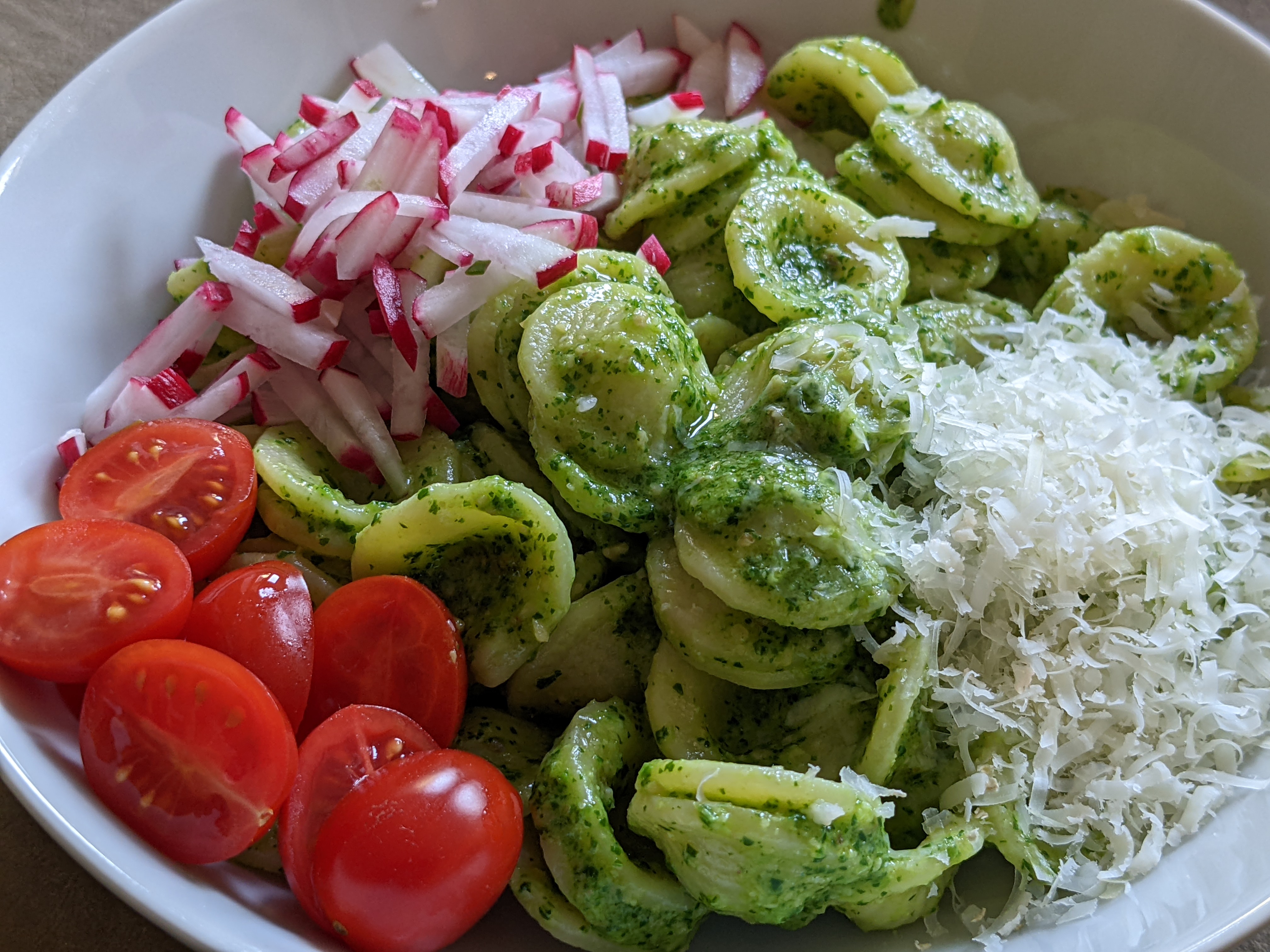
A composite image of pasta dishes with orecchiette that we've had over 2 years.Our favorite orecchiette dish: with radish pesto.
Left: A composite image of pasta dishes with orecchiette that we've had over 2 years.
Right: Our favorite orecchiette dish: with radish pesto.


Background


Let's start with the name: orecchiette (plural) and singular orecchietta (singular) comes from the Italian orecchia for ear and the diminutive etta for small.

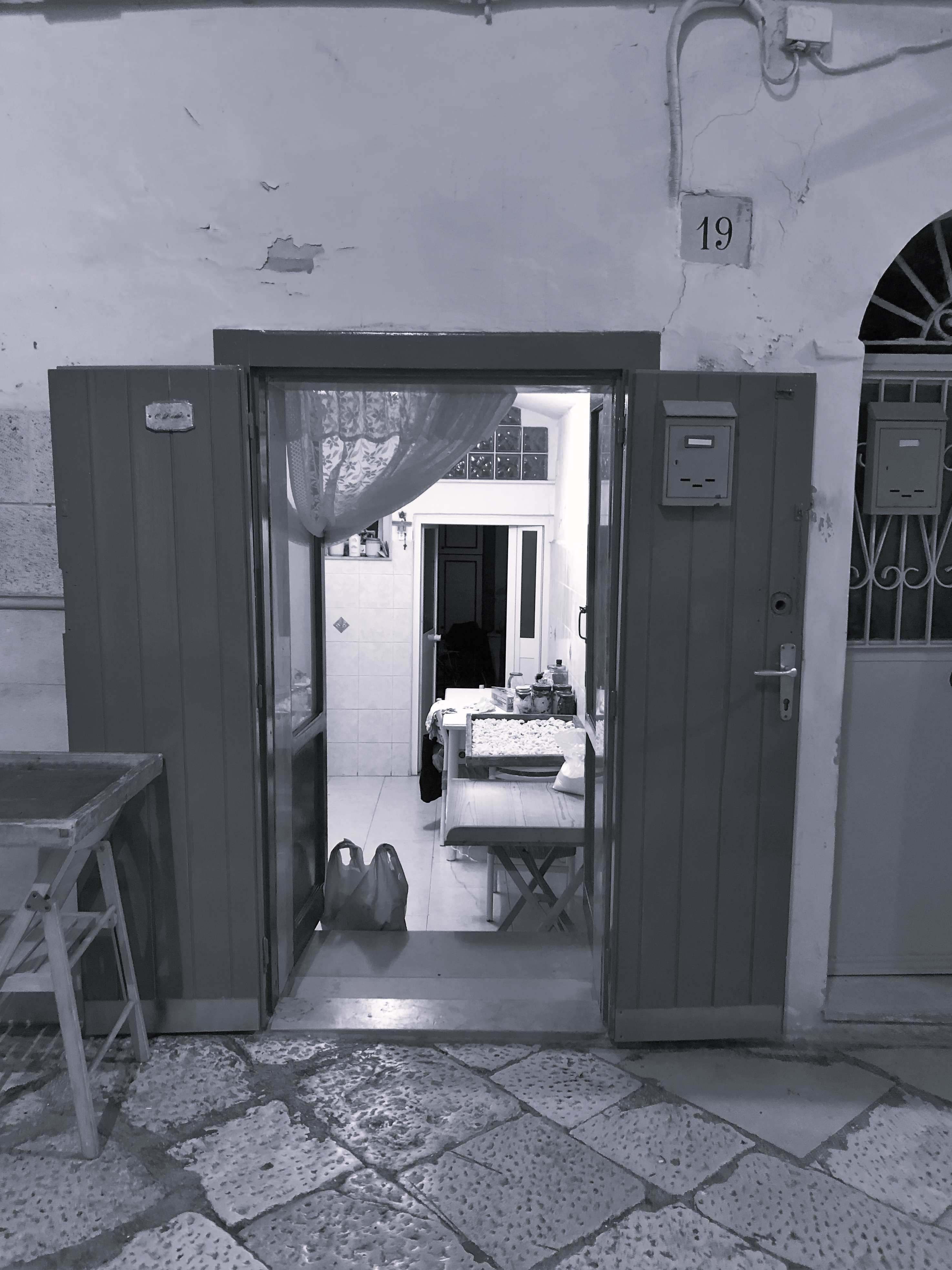
This ear-shaped pasta is a pasta typical of Apulia (Puglia), in Southern Italy. In particular, orecchiette pasta is closely associated with the city of Bari. In the old city there is a street nicknamed la Via delle Orecchiette where you can buy fresh orecchiette displayed outside of family kitchens.

We visited Bari a few years ago over a long weekend in October. It was still warm at night and on the la Via delle Orecchiette and adjacent streets in the old quarters, doors were wide open as living rooms and kitchens spilled out into the narrow streets. Families sat outside their homes talking, kids played, and a neon-lit Padre Pio blessed us as we walked by. It's here you can get your fill of orecchiette.

And if you don't have easy access to fresh, hand-made orecchiette, our favorite brand of dry pasta is De Cecco.


Orecchiette for sale in Bari in October 2019.A kitchen in old town Bari where orecchiette are made.A Father Pio altar in old town Bari.Narrow street of Bari at night.
Left: Orecchiette for sale in Bari in October 2019.
Center left: A kitchen in old town Bari where orecchiette are made.
Center right: A Father Pio altar in old town Bari.
Right: Narrow street of Bari at night.


We have orecchiette pasta in one way, shape, or form a few times a month. Why?
  • The little depressions in the pasta are perfect for holding sauces.
  • The pasta has a nice feel biting into it.
  • Orecchiette, to us, make an attractive presentation on the plate (or bowl!)
What are some of our favorite ways to prepare it?
  • With a pesto made of fresh green radish tops, walnuts, and pecorino. See recipe below.
  • Tossed with zucchini, broccoli rabe, chicory, or artichokes sauteed in olive oil.
  • In a rich cherry tomato sauce with broccoli (or cauliflower). See recipe below.
  • With Sgombro (mackerel) or tuna in a fresh tomato sauce.
  • Sometimes with just a simple tomato sauce.
Why do we even have all these food pics?
  • As part of our interest and research in the area of personal information management, we capture a lot of our day-to-day life, including the dishes we prepare at home or enjoy out. For more information on our work – called Scrapbook – see A Personal Information Management System: Introducing Scrapbook.
  • In the composite image of pasta, the first orecchiette pic was taken April 2nd, 2020 and the last one March 29th, 2022. That's two years of orecchiette, which comes out to be 5.4 orecchiette dishes a month. But who's counting? 

Radish Pesto Recipe for Orecchiette

Inspired by a daily pasta special we had once at Il Corvo in Seattle, this is one of our favorite preparations. (Il Corvo has been closed since May 2020, but now has a sibling in West Seattle called Il Nido, and another opening soon in Waitsburg near Walla Walla to be called Vaccipiano.)


The recipe is simple, flexible, quick to assemble, and very satisfying, dependent only on finding one or two beautiful bunches of radishes with their greens still attached and in full splender.

For six generous portions.

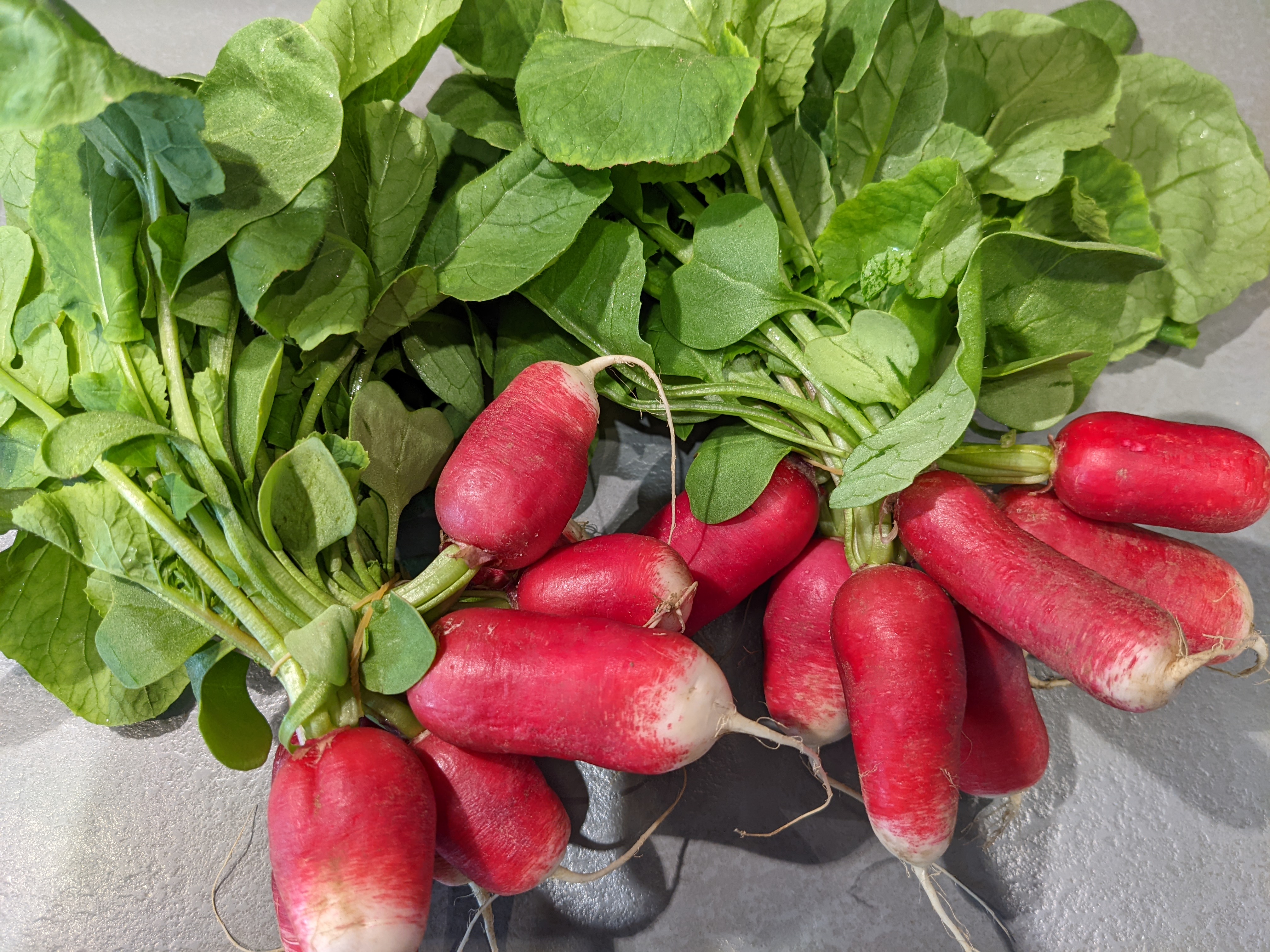
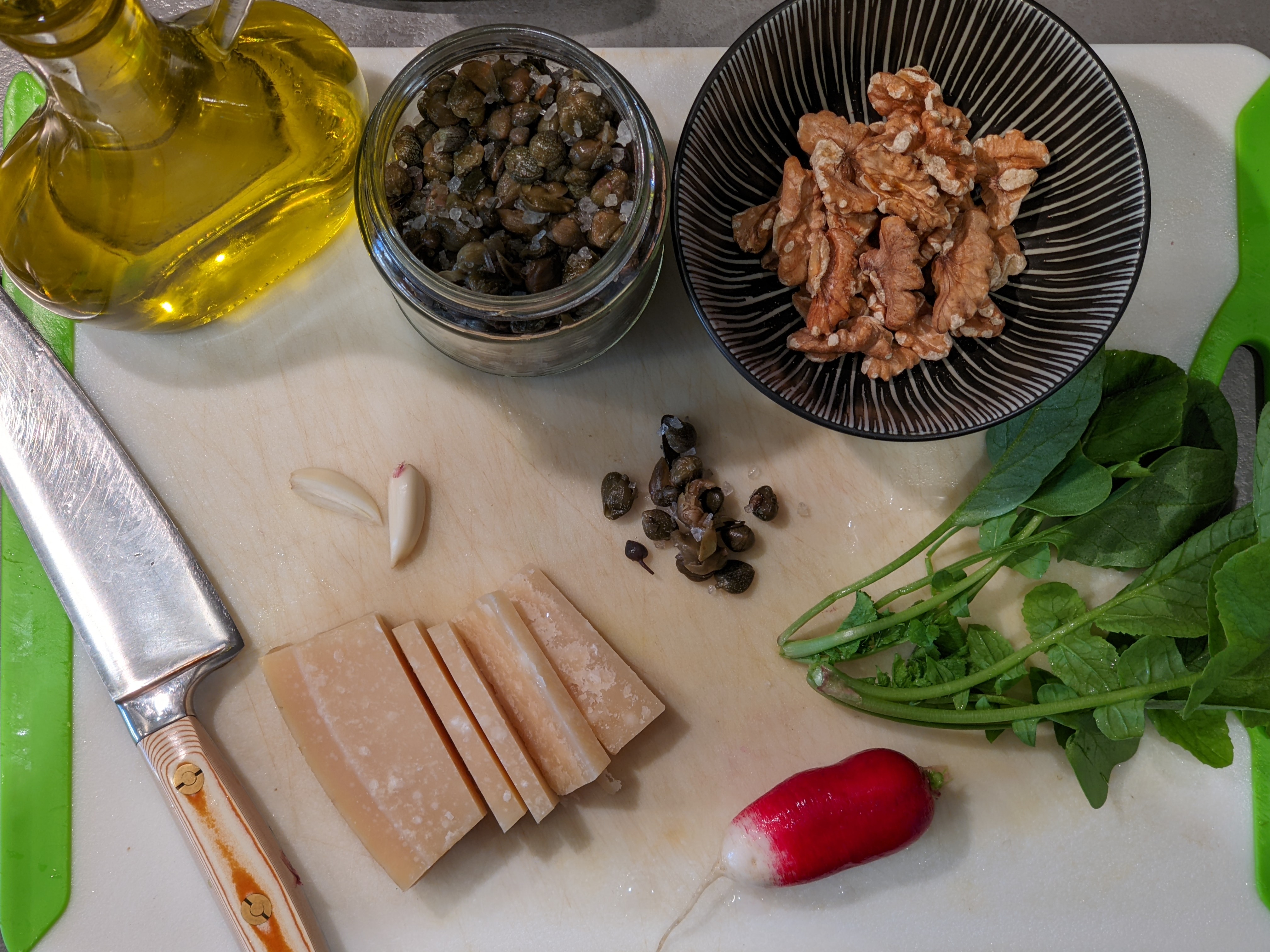
  • 2 bunches of radishes with greens, greens separated, washed, and dry. Set the radishes aside.
  • 1 clove garlic, chopped
  • 1 teaspoon salted capers, rinsed (optional)
  • 40g toasted walnuts
  • 50g pecorino sardo, toscana, or parmigiano reggiano, cut into small pieces
  • 1/2 teaspoon course salt
  • Olive Oil, 1/3-1/2 cup

1. Put the radish greens, (not the radishes themselves) into the bowl of a food processor.

2. Add the garlic, capers, walnuts, cheese, and half of the salt.

3. Pulse to mince everything together.

4. Turn food processor to low, adding olive-oil until mixture reaches the consistency of a thick sauce (pesto!). Try not to over-blend.
Note: An immersion blender can be used instead. You'll want to have a sufficiently narrow, tall container to blend in.
5. Taste for saltiness, adding more coarse salt as desired.

6. Place a portion of the radish pesto in a large bowl. For example, if you're preparing the dish for two people, you'd use about 250g of dry pasta, and a third of the pesto from the recipe above. 

7. Cook pasta in boiling, salted water to al dente

8. Drain, saving some of the pasta water.

9. Toss the pasta with the pesto, adding pasta water if too thick.

10. Serve in bowls, garnished with julienned radish and grated pecorino cheese.
Note: Sliced cherry tomatoes and/or sun-dried tomato add both flavor and a great color-pop to the dish.
Orecchiette with radish pesto - starting with radishes.Orecchiette with radish pesto - cleaing radishes and separting greens.Orecchiette with radish pesto - the other ingredients.Orecchiette with radish pesto - the sauce takes shape.Orecchiette with radish pesto - adding the sauce to the pasta.Orecchiette with radish pesto - plated with garnishes.
Six images showing the process of preparing the radish pesto, served with orecchiette.


Fresh Tomato and Broccoli Recipe for Orecchiette

Recipe for 4 small servings or 2 larger servings.

In a large pot, bring water to a boil:

  • Add a palmful of salt to the water for better color and flavor, most of the salt stays with the water,
  • Rinse and break or cut broccoli into bite sized pieces, 1 – 2 lbs or 2 – 3 nice crowns.
  • Parboil until barely tender.
  • Remove to colander to drain and cool.
  • Keep water on flame to cook pasta

In a sauté pan over a low flame add: (pan should be large enough to hold the broccoli too)

  • 3-4 Tbsp olive oil
  • 1 clove fresh minced garlic
  • 1 Tbsp capers, rinsed
  • 2 Tbsp dried currants or raisins
  • 2 Tbsp pine nuts
  • 2-3 Tbsp bread crumbs
  • Pinch red pepper flakes

Allow to sauté until garlic and pine nuts begin to brown:

  • Add 2 anchovy filets or 1 Tbsp anchovy paste.
  • Stir to dissolve.

Cook pasta in broccoli water per box instructions (10-13 minutes for al dente)

  • ~250 grams (half a box) of orecchiette (ear shaped) pasta, but you can use whatever type of pasta you like. The little ears hold the sauce nicely and are easy to eat.

In the meantime, add drained broccoli pieces to the sauté pan with the other ingredients.

Toss or stir gently over medium flame

When ready, combine drained pasta with the broccoli mixture. Toss gently.

Serve with a drizzle of fresh olive oil and grated parmesan or pecorino cheese.


Fresh tomato and broccoli with orecchiette.Our favorite brand of orecchiette: De Cecco.
Left: Fresh tomato and broccoli with orecchiette.
Right: Our favorite brand of orecchiette: De Cecco.