Showing posts with label puglia. Show all posts

Wednesday, April 6, 2022

Orecchiette Pasta Dishes and Recipes for our Favorites: Radish Pesto and Tomato-Broccoli

Background | Radish Pesto Recipe | Tomato and Broccoli Recipe

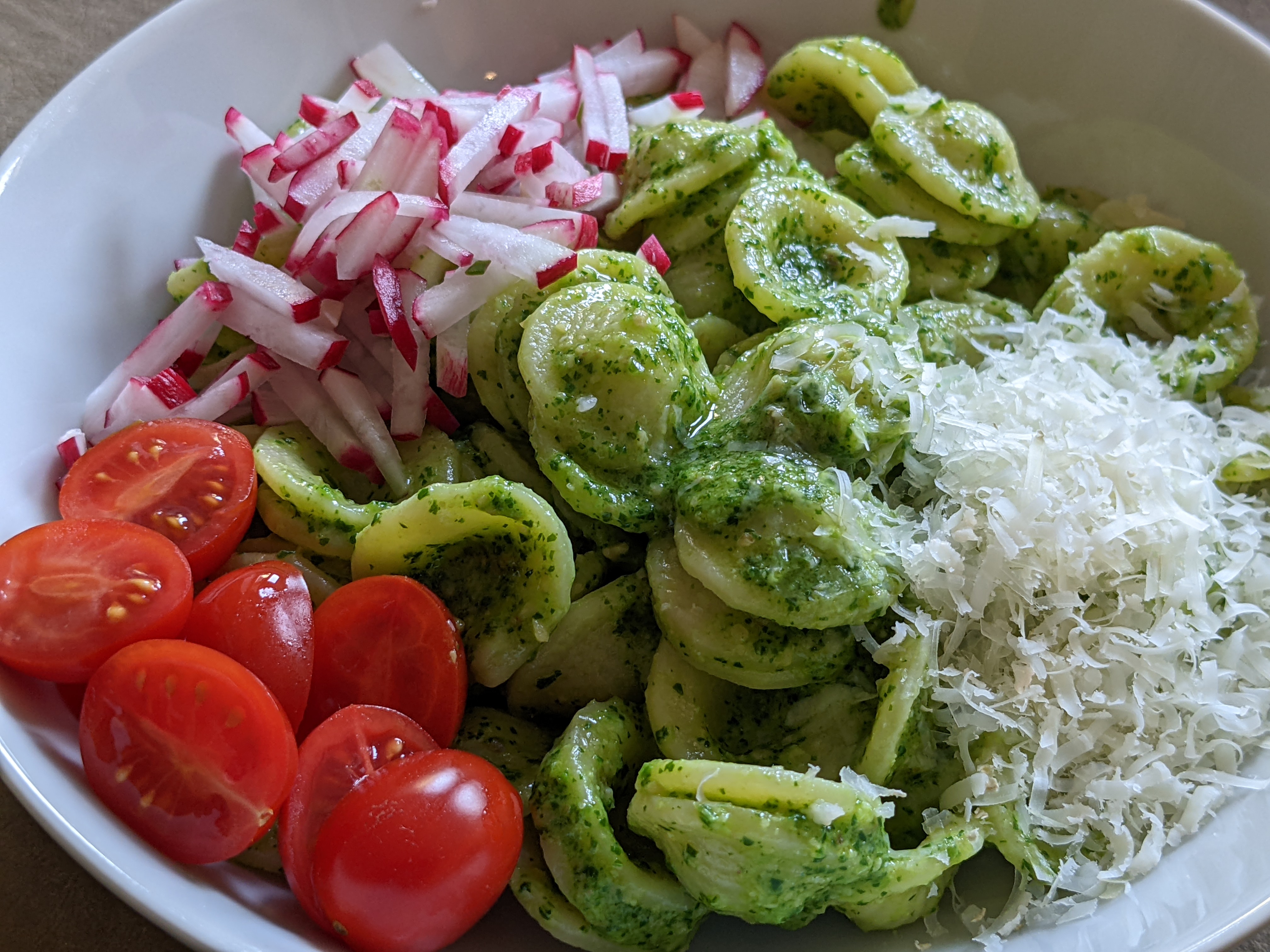
A composite image of pasta dishes with orecchiette that we've had over 2 years.Our favorite orecchiette dish: with radish pesto.
Left: A composite image of pasta dishes with orecchiette that we've had over 2 years.
Right: Our favorite orecchiette dish: with radish pesto.


Background


Let's start with the name: orecchiette (plural) and singular orecchietta (singular) comes from the Italian orecchia for ear and the diminutive etta for small.

This ear-shaped pasta is a pasta typical of Apulia (Puglia), in Southern Italy. In particular, orecchiette pasta is closely associated with the city of Bari. In the old city there is a street nicknamed la Via delle Orecchiette where you can buy fresh orecchiette displayed outside of family kitchens.

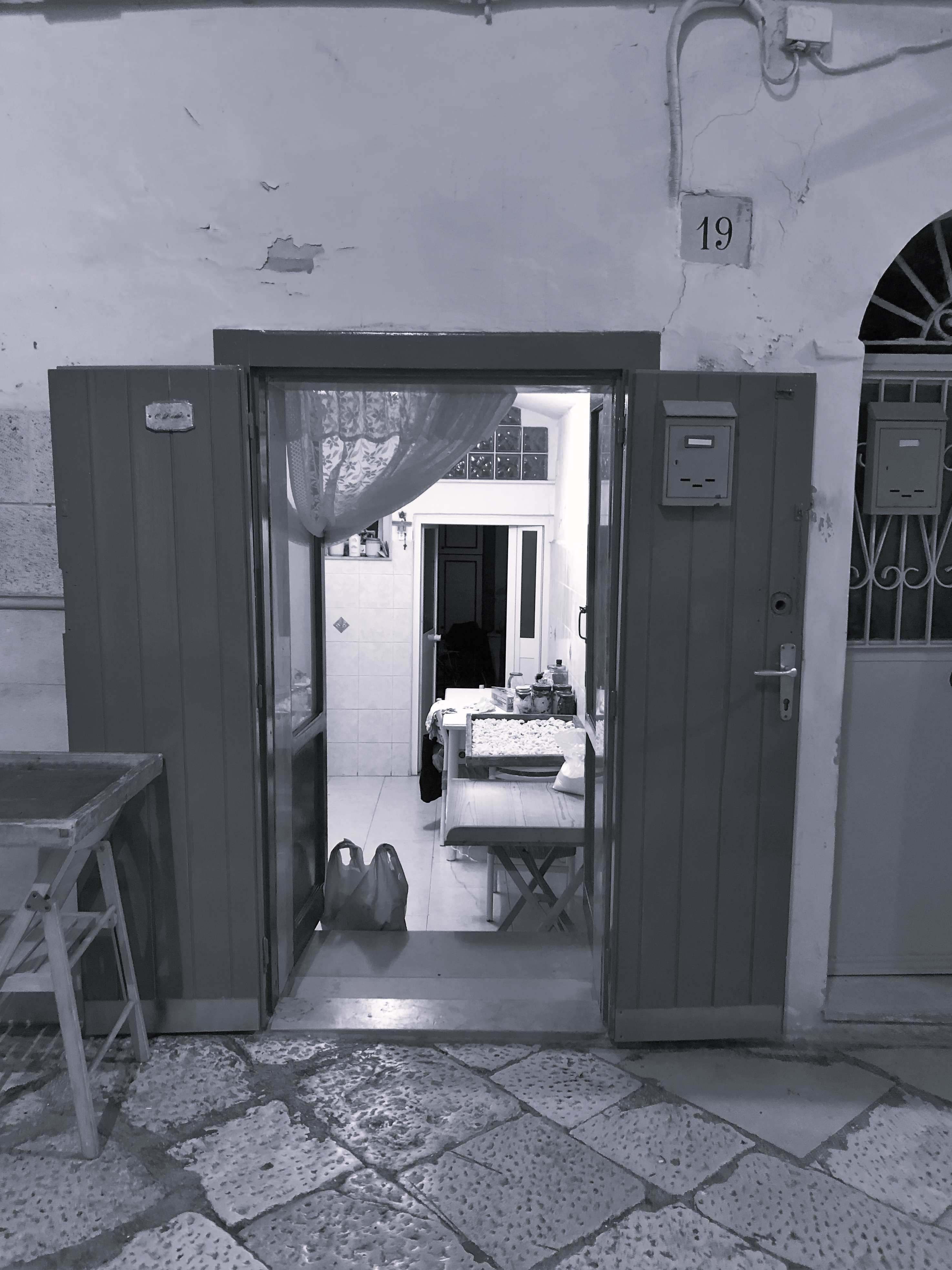
We visited Bari a few years ago over a long weekend in October. It was still warm at night and on the la Via delle Orecchiette and adjacent streets in the old quarters, doors were wide open as living rooms and kitchens spilled out into the narrow streets. Families sat outside their homes talking, kids played, and a neon-lit Padre Pio blessed us as we walked by. It's here you can get your fill of orecchiette.

And if you don't have easy access to fresh, hand-made orecchiette, our favorite brand of dry pasta is De Cecco.


Orecchiette for sale in Bari in October 2019.A kitchen in old town Bari where orecchiette are made.A Father Pio altar in old town Bari.Narrow street of Bari at night.
Left: Orecchiette for sale in Bari in October 2019.
Center left: A kitchen in old town Bari where orecchiette are made.
Center right: A Father Pio altar in old town Bari.
Right: Narrow street of Bari at night.


We have orecchiette pasta in one way, shape, or form a few times a month. Why?
  • The little depressions in the pasta are perfect for holding sauces.
  • The pasta has a nice feel biting into it.
  • Orecchiette, to us, make an attractive presentation on the plate (or bowl!)
What are some of our favorite ways to prepare it?
  • With a pesto made of fresh green radish tops, walnuts, and pecorino. See recipe below.
  • Tossed with zucchini, broccoli rabe, chicory, or artichokes sauteed in olive oil.
  • In a rich cherry tomato sauce with broccoli (or cauliflower). See recipe below.
  • With Sgombro (mackerel) or tuna in a fresh tomato sauce.
  • Sometimes with just a simple tomato sauce.
Why do we even have all these food pics?
  • As part of our interest and research in the area of personal information management, we capture a lot of our day-to-day life, including the dishes we prepare at home or enjoy out. For more information on our work – called Scrapbook – see A Personal Information Management System: Introducing Scrapbook.
  • In the composite image of pasta, the first orecchiette pic was taken April 2nd, 2020 and the last one March 29th, 2022. That's two years of orecchiette, which comes out to be 5.4 orecchiette dishes a month. But who's counting? 

Radish Pesto Recipe for Orecchiette

Inspired by a daily pasta special we had once at Il Corvo in Seattle, this is one of our favorite preparations. (Il Corvo has been closed since May 2020, but now has a sibling in West Seattle called Il Nido, and another opening soon in Waitsburg near Walla Walla to be called Vaccipiano.)


The recipe is simple, flexible, quick to assemble, and very satisfying, dependent only on finding one or two beautiful bunches of radishes with their greens still attached and in full splender.

For six generous portions.

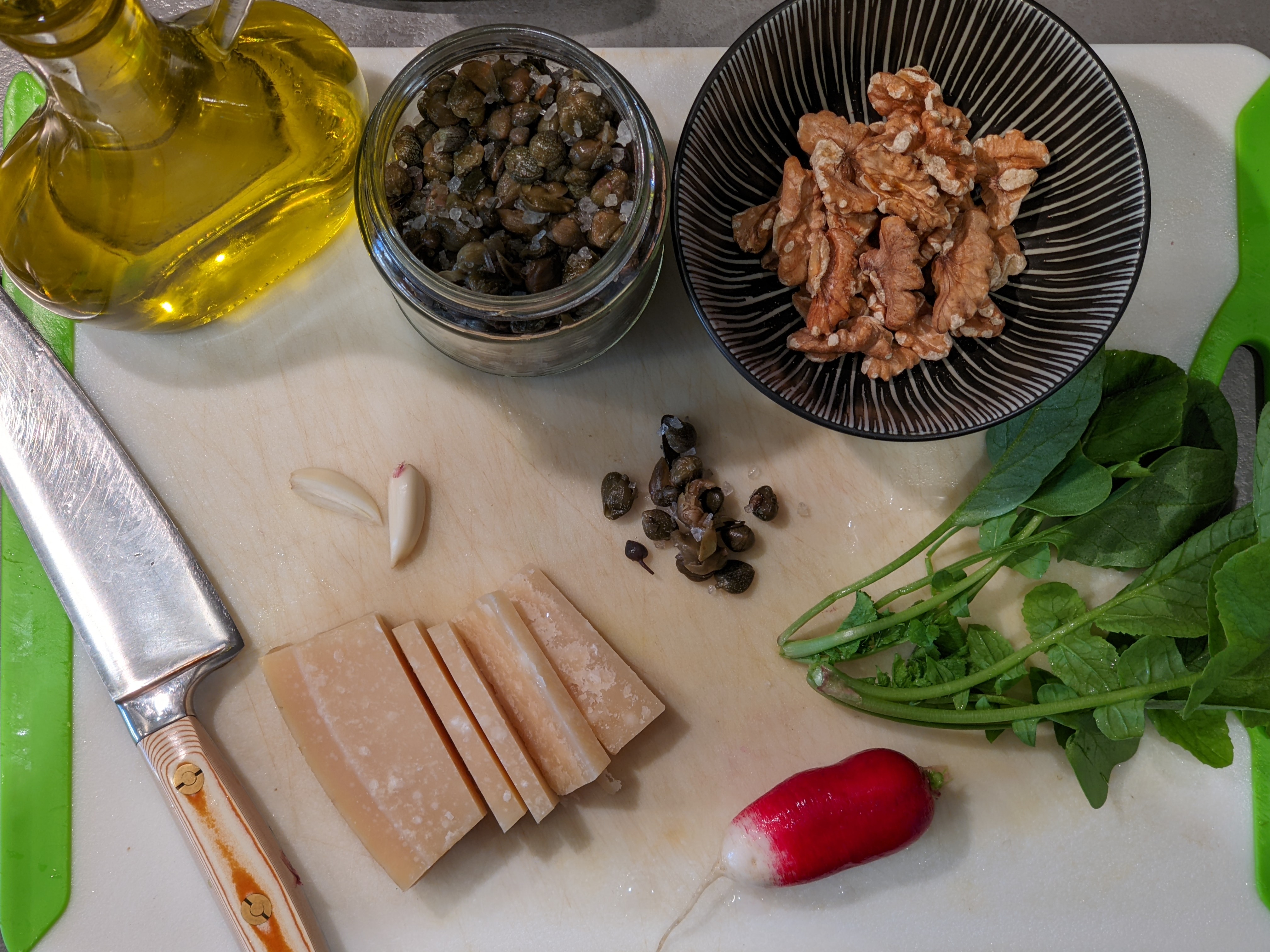
  • 2 bunches of radishes with greens, greens separated, washed, and dry. Set the radishes aside.
  • 1 clove garlic, chopped
  • 1 teaspoon salted capers, rinsed (optional)
  • 40g toasted walnuts
  • 50g pecorino sardo, toscana, or parmigiano reggiano, cut into small pieces
  • 1/2 teaspoon course salt
  • Olive Oil, 1/3-1/2 cup

1. Put the radish greens, (not the radishes themselves) into the bowl of a food processor.

2. Add the garlic, capers, walnuts, cheese, and half of the salt.

3. Pulse to mince everything together.

4. Turn food processor to low, adding olive-oil until mixture reaches the consistency of a thick sauce (pesto!). Try not to over-blend.
Note: An immersion blender can be used instead. You'll want to have a sufficiently narrow, tall container to blend in.
5. Taste for saltiness, adding more coarse salt as desired.

6. Place a portion of the radish pesto in a large bowl. For example, if you're preparing the dish for two people, you'd use about 250g of dry pasta, and a third of the pesto from the recipe above. 

7. Cook pasta in boiling, salted water to al dente

8. Drain, saving some of the pasta water.

9. Toss the pasta with the pesto, adding pasta water if too thick.

10. Serve in bowls, garnished with julienned radish and grated pecorino cheese.
Note: Sliced cherry tomatoes and/or sun-dried tomato add both flavor and a great color-pop to the dish.
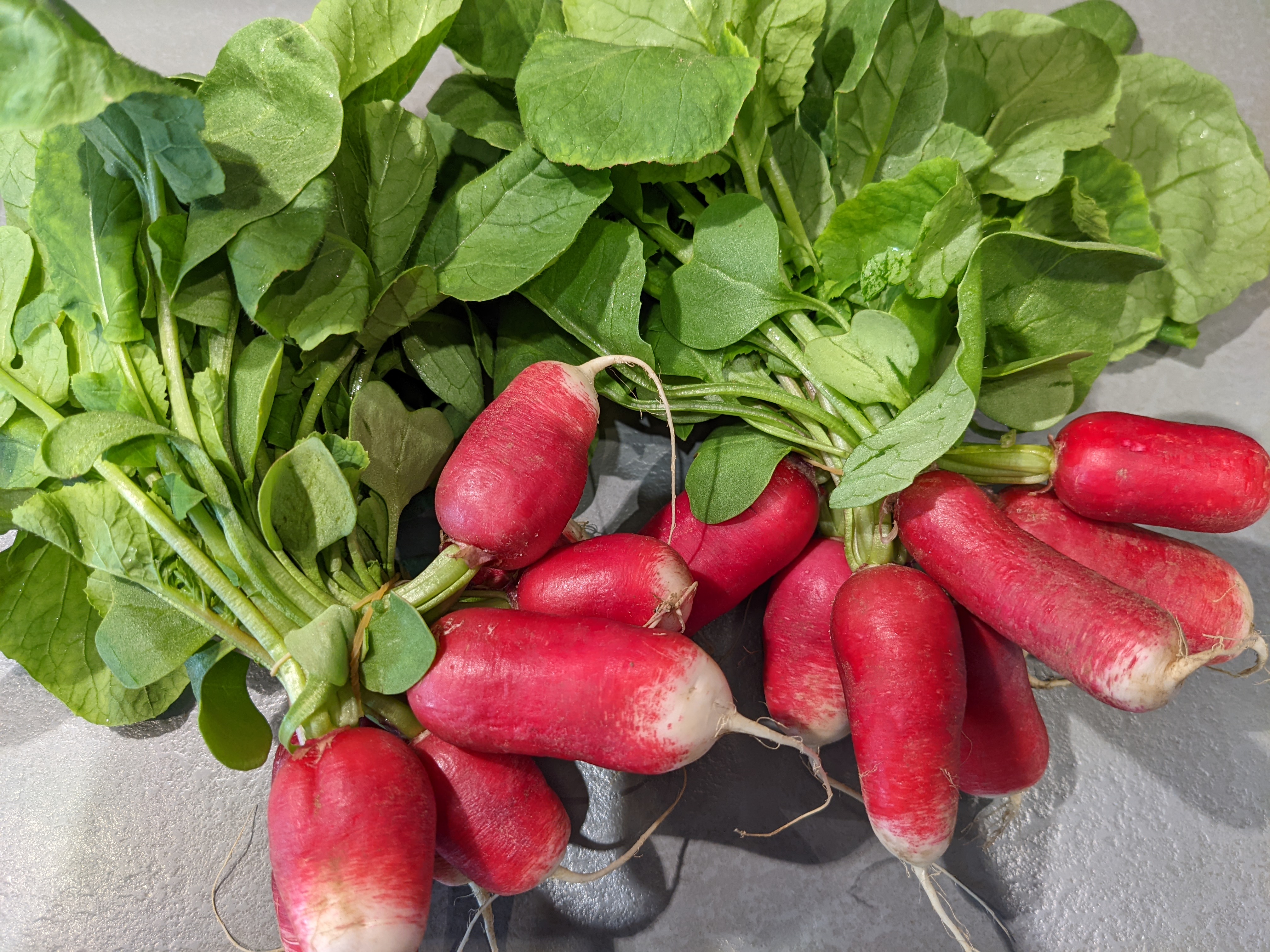
Orecchiette with radish pesto - starting with radishes.Orecchiette with radish pesto - cleaing radishes and separting greens.Orecchiette with radish pesto - the other ingredients.Orecchiette with radish pesto - the sauce takes shape.Orecchiette with radish pesto - adding the sauce to the pasta.Orecchiette with radish pesto - plated with garnishes.
Six images showing the process of preparing the radish pesto, served with orecchiette.


Fresh Tomato and Broccoli Recipe for Orecchiette

Recipe for 4 small servings or 2 larger servings.

In a large pot, bring water to a boil:

  • Add a palmful of salt to the water for better color and flavor, most of the salt stays with the water,
  • Rinse and break or cut broccoli into bite sized pieces, 1 – 2 lbs or 2 – 3 nice crowns.
  • Parboil until barely tender.
  • Remove to colander to drain and cool.
  • Keep water on flame to cook pasta

In a sauté pan over a low flame add: (pan should be large enough to hold the broccoli too)

  • 3-4 Tbsp olive oil
  • 1 clove fresh minced garlic
  • 1 Tbsp capers, rinsed
  • 2 Tbsp dried currants or raisins
  • 2 Tbsp pine nuts
  • 2-3 Tbsp bread crumbs
  • Pinch red pepper flakes

Allow to sauté until garlic and pine nuts begin to brown:

  • Add 2 anchovy filets or 1 Tbsp anchovy paste.
  • Stir to dissolve.

Cook pasta in broccoli water per box instructions (10-13 minutes for al dente)

  • ~250 grams (half a box) of orecchiette (ear shaped) pasta, but you can use whatever type of pasta you like. The little ears hold the sauce nicely and are easy to eat.

In the meantime, add drained broccoli pieces to the sauté pan with the other ingredients.

Toss or stir gently over medium flame

When ready, combine drained pasta with the broccoli mixture. Toss gently.

Serve with a drizzle of fresh olive oil and grated parmesan or pecorino cheese.


Fresh tomato and broccoli with orecchiette.Our favorite brand of orecchiette: De Cecco.
Left: Fresh tomato and broccoli with orecchiette.
Right: Our favorite brand of orecchiette: De Cecco.


Tuesday, August 2, 2016

Puglia – Street Sign Language Lesson VII

previous lesson | this lesson | next lesson


For this episode of street sign language lessons, we head to Puglia (Apulia in English, but I think it sounds bad so I avoid it). We were in Puglia for 10 days and couldn’t help but snap shots a few street signs and other words on the street that give a peak into Pugliese culture and our time there.

Images showing the creation of "iamo" verbs in Italian.
Focacciamo - Polignano a mareSandialiamo - Polignano a mareMusichiamo a LocorotondoPugliamo
Focacciamo, Sandialiamo, Musichiamo, Pugliamo – Let’s do focaccia, sandals, music, and Puglia
Back in Street Sign Language Lesson V, we talked about creating first person plural verbs (“we”) out of a word that typically isn’t used as a verb. In Lesson V, it was snackiamo (“let’s snack”) and turistiamo (“let’s be tourists”). While in Puglia we captured a few more. I guess it’s just too darn cute to resist doing. Perhaps most clever is pugliamo, which you could think of as coming from “Puglia + amo” -> “I love Puglia” and "Let's do Puglia". Focacciamo and sandaliamo were seen in Polignano a Mare; musichiamo in Locorotondo. Pugliamo was sent to us by a friend who saw it in Ostuni.

Left: Pizza dough made from hemp seed. Right: Six-petaled flower of the Knights Templar at Museo Faggiano.
Impasto alla farina di canapa – “Dough from hemp wheat”Knights Templar fiore della vita
Impasto alla farina di canapa – Dough from hemp wheat
We saw this sign in Lecce promoting pizza made with hemp dough, but didn’t stop to try it. I’ve been confused for a while trying to distinguish between the iconography of the hemp leaf, Lega Nord, and the fiore della vita. Lega Nord’s symbol derives from the fiore della vita and has 6 leaves, arranged uniformly in a circle. The fiore della vita was also a symbol used by the Knights Templar. We saw this use of the fiore in the quirky Museo Faggiano in Lecce. The fiore della vita is formed by six overlapping circles. The hemp leaf is palmately compound or digitate with 3-9 leaflets of various sizes. Market opportunity: impasto alla farina delle fiore della vita.

Lido La Barchetta, Castellaneta Marina Italy.
Spiaggia in concessione – “Beach for hire” Lido La Barchetta. Castellaneta Marina
Spiaggia in concessione – Beach for rent
When we visited Puglia for the first time in fall 2010 (see Alberobello, Grotte di Castellana, Torre Gauceto), the coast (Torre Guaceto), it was deserted. Zilch, zero for people. This time, on our second visit to Puglia it being peak beach season, we were in for a different experience: lots more people. Over 10 days, we swam four times in the Adriatic and twice in the Ionian. Lido La Barchetta in Castellaneta Marina, west of Taranto (pictured here) was our first lido experience. You pay to buy a position (umbrella, chair/recliner, WiFi access, music, entertainment) on the beach. On this day, we paid 5 euros a spot. This beach in the photos above looks empty because we went late in the afternoon after everyone had left for the day, and it was a weekday. We prefer public locations (non-lido) that are in located in more interesting places such as rocky shores or little bays or coves (cale), such as Torre Incina or Torre Uluzzo, locations we went swimming at as well.

Left Two Images: Piazza in Massafra, Italy where you won't find Pokémon. Right Two Images: Street art in Massafra.
Piazza in Massafra, Italy where you won't find PokémonPiazza in Massafra, Italy where you won't find PokémonStreet art in MassafraStreet art in Massafra
Piazza depokemonizzata – No Pokémon here
We saw the depokemonizzata sign in Massafra, a curious town we spent part of a day visiting. The piazza was near Falsopepe, a nice restaurant where we enjoyed a beautiful dinner on their rooftop terrace. Clearly, not everyone is embracing the latest Pokémon rage sweeping the world. I admit, it took me several moments to decode the sign as I didn't expect to find this cultural reference here. Nearby the piazza, there was some interesting street art. Massa-where you are wondering? It’s here.

Sign for a restaurant in Martina Franca
Lo Sacciapensieri, Martina Franca
Lo Scacciapensieri – Forget your troubles
Scacciapensieri is a mouth harp, but it can also mean a pastime or diversion. It’s in the latter sense that I translate the name of this trattoria in Martina Franca. Scaccia comes from scacciare, drive away or shoo. Pensieri are thoughts. A pastime helps drive away thoughts. Maybe playing the mouth harp does the same thing?

Parking Ticket Issued by a Noci Parking Enforcement Officer
Parking Ticket Issued by Noci Parking Enforcement Officer
Ausiliari della sosta – Parking enforcement officer
If you see someone with this written on their jacket, check that your car is parked correctly. This parking ticket issued to us in Noci (BA), reads – by piecing together the phrases  – noi sottoscritti ausiliari della sosta G. Miccolis abbiamo accertato che il autovettura sostava in area pagamento senza esporre il tagliando di pagamento. In other words, we didn’t pay to park and we should have. That’s bad enough, but I swear there was a bit of collusion between a group of old men who watched us park and the rapid enforcement by Officer Miccolis. There were plenty of illegally parked cars nearby, most without payment, but the officer zeroed in on us with the help of one particular old man who gleefully stood by smiling as the officer finished writing the ticket and handed it to me just as I returned to the car. We paid the fine within a day (at the lower rate) in the Post Office.

Images from the Museo Provinciale Sigismondo Castromediano in Lecce Italy. Left Two Images: A 5th century BC vase depicting Silenus. Center Right Image: Looking down on the Salento peninsula. Far Right Image: Endless display cases of artifacts. 
A 5th century BC vase depicting SilenusA 5th century BC vase depicting SilenusLooking down on Salento peninsulaEndless display cases of artifacts.
Silene barbato itifallico nell’atto di saltare su una cerva con rython in mano – Bearded Silenus with an erection in the act of jumping on a deer with a rhyton in hand
In Lecce, the museum Museo Provinciale Sigismondo Castromediano (a mouthful) is a stop for you if you are interested in the history of the province from prehistoric, through Messapian culture and up to Roman times. It's free to enter and is just outside the city wall to the south, an easy walk. This museum is a counterpoint to the Museo Faggiano. An interesting word from the description of this vase, created around 500 BC, is itifallico, which means a phallus (il fallo) in an erect state.

Castello di Gallipoli. Left and Center: Warning signs to visitors. Right: Part of exhibition - Il Terzo Paradiso by Michelangelo Pistoletto.
Warning signs to visitors - Castello di GallipoliWarning signs to visitors - Castello di GallipoliIl Terzo Paradiso by Michelangelo Pistoletto
Attenti alla testa - watch your head
Parapetto basso – low wall
We saw these two signs at the Castello di Gallipoli. (Yeah, I know, I should be looking at the castle, not at the signs.) One sign translates attenti alla testa to the ominuous “beware of the head”, whereas "watch your head" is closer to what it means. Parapetto does have one sense as “bulwark”, but most English speakers in the castle seeing the sign will experience this as a wall without quibbling as to the exact type of wall. WThe castle was hosting an interesting exhibition Heroes – Eroi tra Arte e Design.

Left: Pizzi in a store window in Lecce. Right: Advertisement for pucce.
Pizzi in a store window in LecceAdvertisement for pucce
Pizzo: pane tipico con cipolla, olive con nocciolo, poco peperoncino, pomodoro - Pizzo: traditional bread with unpitted olives, a little chili pepper, tomato
Pucce e insalate - Typical Pugliese bread and salad.
Pizzi (singular pizzo) are a traditional bread you see on the streets or in bread baskets in restaurants. Be careful, the olives still have their pits in them. Pucce (singular puccia) are made from the same dough as pizza, and as shown in the image above, are typically used as a sandwich. Another common bread we saw in Salento (southern Puglia) were friselle (singular frisella), which are twice-cooked, hard and dry, and require a brief soak in water to eat them unless you want to break a tooth on first bite. Friselle can be conserved for a long time, and are excellent with olive oil, fresh tomato and basil.

Monday, November 15, 2010

Ostuni Puglia

S. Vito Martire Roof - Ostuni
Roof of S. Vito Martire 

 A lazy Sunday afternoon and it’s our last full day in Puglia. What to do? A drive to Ostuni seems to be the ticket. We arrive in Ostuni in the late afternoon. (We spent the first part of the day visiting the regional museum (Museo del Territorio) in Alberobello and then stopping at Antico Frantoio Intini and to order olive oil.) So in Ostuni, we are smack in the middle of the Sunday afternoon lull so the town seems deserted but enchanting and we get lost in winding, white-washed stairways and passages. The name Città Bianca, what Ostuni is sometimes referred to as, makes sense. We wander around the centro storico and then head for a late afternoon Sunday dinner reservation at L'Osteria del Tempo Perso – which hits the spot. A specialty of the osteria is a tegamino di funghi cardoncelli in crosta di pane - a mushroom pot pie of sorts, if we had to equate it to something familiar. Cardoncelli are king oyster mushrooms that are commonly found in the woods of the Murge, which characterizes the area around Ostuni.

View of Centro Storico of Ostuni


View from Centro Storico Toward the Adriatic


Arch Supports in Ostuni Centro Storico


A Steep Street in Ostuni Beckons


Ostuni - Stair or Street?

Sunday, November 14, 2010

Torre Gauceto, Puglia

View of La Torre from Inside the Bunker View of La Torre from Inside the Bunker 

Torre Guaceto is natural reserve on the coast of the Adriatic, 15 km northwest of Brindisi, which includes both water (map of the marine reserve) and land. We spend a day wandering around as one our five days in Puglia. The visitor center for Torre Guaceto is 3km inland at Serranova. (It is closed today, on this Saturday in November.) 

The word Guaceto “derives from Arabic Gaw-sit that means sweet water” [ref]. The full name of the park comes from the tower build in 1547 by the Aragonesi to control and protect against pirates. 

At Torre Guaceto (Italian Wikipedia page) we enter the area at the north end of the reserve called Punta Penna Grossa, and park. Our goal is to walk to the eponymous tower 4km in the distance. When we park we met a well-dressed older lady who followed us in. Otherwise it is deserted. She cleans the back windshield of her car. We say hello and ask her a few questions about the area. She reminds us to lock our car, but tells us that otherwise, it's safe. She is there to just get a look at the tower. She offers us use of her fetching binoculars but we decline. 

We start our walk towards the Torre, first barefoot and then in shoes. We see two carabiniere in a car check us out - we wave. The beach and area is nice but for the trash. Yes, trash. There are endless plastic items washed up on shore. The way the currents work we think it is from the countries across the way. This coast is just on the wrong side of the currents? 

We think of a storyline for a book or movie: a man is stranded, away from any civilization, and with washed-up trash like we see. How would he survive? Each item we see is not trash now, but survival. There are many bottles filled with liquid so if there were no water source in this hypothetical location our stranded person might make it. Past the basics for survival he could outfit his grass hut with what we see: a colander, a juice pulper, plastic crates, a freezer, netting, flip-flops, sheets of plastic, luggage, buckets and more! When we reach the tower it's cleaner, but the tower, while pretty form the distance, is just a block up close that isn’t, naturally, open. Nearby is a small, round WWII bunker - mostly underground - on which we sit eating snacks and staring at the sea. In front of the bunker, there is a sign that reads Tempi Tristi. Tempi di Guerra - sad times, times of war. Well, today it's happy times, the day has turned out to be beautiful and we are on vacation. 

On the walk back to Punta Penna Grossa back we meet an old man who drives an Ape. At first it's hard to understand his questions though within a few moments we realize he is asking typical questions and that we are just not use to the accent. 

Before returning to Alberobello, we visit the “land” part of the reserve, on the west side of E55 and spend some time walking through olive groves, trees that have been around for hundreds of years.

La Torre in the Distance from Punta Penna Grossa La Torre in the Distance from Punta Penna Grossa

Marina Protteta Sign - Torre Guaceto

Marina Protteta Sign - Torre Guaceto

La Spiagga Sconosciuta Information Sign

La Spiagga Sconosciuta Information Sign 

Signs Showing the Hiking Paths at Torre GuacetoSigns Showing the Hiking Paths at Torre Guaceto 

Torre Guaceto - A Sample of Some of the Trash

Torre Guaceto - A Sample of Some of the Trash

Approaching La Torre
 
Approaching La Torre

Torre Guaceto Bunker

Torre Guaceto Bunker

Torre - Up Close

Torre - Up Close

Times of War, Sad Times

Times of War, Sad Times

Olive Grove - Torre Guaceto

Olive Grove Sign - Centuries-old olive trees
Olive Grove Sign - Centuries-old olive trees 

Olive Grove - Olive Tree - Near Torre Guaceto