Showing posts with label travel planning. Show all posts

Friday, May 29, 2026

Basel, Strasbourg, and the Ferry That Wasn’t a Kite

Plane tree on Quai de la Bruche - Strasbourg Cathédrale Notre-Dame-de-Strasbourg - side view Walking around Strasbourg center city
First row: Images of Basel, Switzerland.
Second row: Images of Strasbourg, France.


We were walking along the Rhine after dinner on our first night in Basel when Travelmarx 1 pointed toward the river and said to Travelmarx 2,

“Look at that kite.”

It wasn’t a kite.

It was a red square with a white cross (the Swiss flag) sign attached to the cable of a small ferry drifting slowly across the current, one of Basel’s Rhine ferries that moves without a motor. The boat is attached to a steel cable and pushed across by the force of the river itself. A few minutes later we were standing on the wooden deck of the boat with a handful of other passengers. The ferryman nudged us away from the bank, letting the Rhine do the rest. The boat angled itself into the current and began sliding sideways across the water, calm and purposeful as it has done since 1877. And the flag was gently sliding across the cable looking very much like a kite for a new set of credulous tourists.

For two Swiss francs we crossed from Kleinbasel (“Little Basel” or “Lesser Basel,” on the right bank) to Grossbasel (“Great Basel” or “Greater Basel,” the older city center on the left bank). After the complicated day it had taken just to get there, including a train strike in Northern Italy, autostrada traffic, and a frantic search for coins to use a bathroom in a Milan train station, the ferry felt like the moment the trip finally began.

Travel often starts that way. Not when the tickets are booked or the train leaves the station, but later, in some small, unexpected moment when the place begins to make sense. Or, perhaps more accurately, when you finally stop troubleshooting the logistics and start looking around.

Art anchor


The reason for our trip to Basel and Strasbourg was simple: see two cities and some world-class museums.

When Italian friends asked where we were going, two questions kept coming back. Why Basel? And why not drive? The first question was easier to answer: museums, the Rhine, and Strasbourg nearby. But that didn't seem like a satisfactory answer for them.

The second question was more revealing. From northern Italy, driving would have been possible, maybe even obvious to some people. But we wanted the train version of the trip: the swaying of the train, passing stations, mindlessly staring out the window, and the sense of having entered a different rhythm before arriving.

Basel has long been recognized as one of Europe’s important museum cities relative to its size, and the collections at the Kunstmuseum Basel delivered exactly what we had hoped for. The museum has the kind of collection that shows you a few things you might have seen and then a whole lot you never saw before. The rooms are large and easy to wander through and the vibe is easy. We spent the better part of a day touring the Neubau and Hauptbau with lunch in between. 

After the Kunstmuseum, our art explorations spread outward from the city. Just across the German border we spent a day wandering the Vitra Design Museum campus (bus 55) in Weil am Rhein, an architectural playground anchored by Frank Gehry’s sculptural museum building. Calling our day on the Vitra campus a “museum visit” feels too narrow. It is more like a small pilgrimage through design, architecture, and furniture in a curated environment that leaves visitors freedom to wander and discover what they might discover.

We saw a wonderful exhibition at Vitra Design Museum, Hella Jongerius: Whispering Things, full of textiles, color, craft, and material intelligence. Outside the museum, the Doshi Retreat, VitraHaus, and Oudolf Garden all added to the feeling that the campus was not just interesting but invigorating, a place where buildings, objects, and plantings kept nudging you awake.

A day after our Vitra visit, we decamped for Strasbourg. Upon arrival and after lunch at Au Petit Bois Vert (under the centuries old sycamore) then we headed to the Musée d’Art Moderne et Contemporain de Strasbourg (MAMCS). MAMCS is a glass-roofed building stretches along the riverbank like a cathedral for modern art, all light, volume, and polished surfaces. It took us two half days to make it through the permanent collection and special exhibitions.

A special nod goes to the Kandinsky rooms at the MAMCS in Strasbourg, anchored by Salon de musique (1931), the Bauhaus‑period canvas that captures Kandinsky’s move from depicting the visible world to building his own autonomous system of color, rhythm, and geometry. The museum arranges the space as a quiet, didactic environment: the painting’s musical analogy becomes the key to understanding abstraction as a historical rupture, and the surrounding works trace his evolution from figuration toward pure form. Within the museum’s bright, architectural calm, the room functions as a focused pause — a place where Kandinsky’s geometry resonates with the building itself and where Strasbourg positions its collection within the broader story of early 20th‑century abstraction.

During our Strasbourg stay, we backtracked south on a short train ride to Colmar to catch the Musée Unterlinden. There the Isenheim Altarpiece turned out to be far more powerful than we expected. We had read about it, of course, but reading about the Isenheim Altarpiece and standing in front of it are different activities. The panels were fantastical, and we couldn't believe that they were painted between 1512 – 1516. Some of the panels would not look out of place as a Tolkien illustration. The Isenheim Altarpiece was sculpted and painted by, respectively, the Germans Nikolaus Hagenauer and Matthias Grünewald, and it is Grünewald's largest work and is regarded as his masterpiece.

The rest of the museum was also a surprise: cloisters, archaeology, decorative arts, modern art, and a building that seemed to keep changing its mind about what kind of museum it wanted to be. We mean this as a compliment. At the very end you end up in the "piscine", a former public bath turned into event space.

One minor disappointment during the trip was the Museum Tinguely in Basel. We were really looking forward to visiting this and thought it might end up being the highlight of our time in Basel, but in the end, it fell a bit flat for us. After spending most of the day at the Kunstmuseum—where the quality of the works and the way they were displayed truly impressed us—we hoped the magic would continue, but it didn’t quite happen. The Tinguely machines themselves felt less refined than we expected, and it was sometimes hard to grasp how the pieces fit together conceptually. The presentation also felt a little messy, and the building didn’t help—it had the vibe of a smaller, second‑tier museum where things were somewhat thrown together. When the machines did activate, the effect was oddly underwhelming and even a bit clumsy, though perhaps that was part of Tinguely’s intent. Perhaps a return visit is in order (earlier in the day) to honestly evaluate the museum. For this trip, the real highlights of our Basel visit were the Kunstmuseum and our day at the Vitra campus—but we did genuinely enjoy the playful Tinguely fountain in town.

Also a yeah-we-know-moment: we did not make it to the Fondation Beyeler in Riehen, which is slightly embarrassing to admit after going all the way to Basel with museums as the stated purpose. The original plan had been to fit it in. Then reality arrived, as it often does, complaining about sore feet and wanting to take it easy. In our defense, we had visited the Kunstmuseum the day before and chose Vitra over Beyeler for our last full Basel day, partly because we wanted the cross-border design-campus experience and partly because Beyeler, with its modern and contemporary art focus, felt like it would overlap more with what we had just absorbed. That was probably the right decision for this trip. It also gives us a perfectly respectable excuse to go back.

So in a way this trip became a chain of art encounters moving up and down the Upper Rhine.

Two cities, same river


Basel and Strasbourg sit only about ninety minutes apart by train, but they felt surprisingly different.

There is a slight geographical sleight of hand in calling them cities on the same river. In Basel, the Rhine runs directly through the city and is impossible to ignore and is important to how you experience the city. In Strasbourg, the Rhine flows along the eastern edge of the city, while the waterways most visitors experience are the Ill River and the canals that curl around the historic center. The Grande Île is bounded by the Ill and the Faux-Rempart canal, and at Petite France the Ill splits into several arms. These waterways are connected to the Rhine, but the experience is different: Basel presents the river as a broad, central presence; Strasbourg reveals itself through bridges, islands, quays, and smaller channels.

Basel is smaller, with a city population of roughly 180,000, and it moves at a gentler rhythm. Walking around, what stood out most was the calm: the river promenades, the tram lines gliding quietly through the streets, and the feeling that the 60% or more of the people we were seeing on the street were locals. There is wealth in Basel, certainly, and order, and a particular Swiss competence that makes even a tram crossing feel lightly choreographed. But it did not feel stiff to us. 

Basel also has a way of putting its old and new selves into the same frame. Around the Marktplatz, the red sandstone Rathaus and the surrounding streets deliver the older city one expects. Then, from all sorts of vantage points, the two-stepped Roche Towers appear in the background, tall enough to make themselves part of the your photo whether you want them or not. Designed by Herzog & de Meuron, they are office buildings (41 and 50 stories) on the Basel campus of Roche, the pharmaceutical and diagnostics company founded in the city in 1896 and still deeply rooted there.

At first, the towers felt slightly disconcerting, as if someone had just plopped them there. But after visiting the Tinguely Museum, we walked back toward the Mittlere Brücke beneath them. At ground level, the area was green, open, and pedestrian-friendly, not at all as severe as the towers can seem from a distance. Well-integrated in our judgment.

Strasbourg, by contrast, is larger, closer to 300,000 people in the city itself and much larger when you consider the wider metropolitan area. Yet in the center, modernity can feel surprisingly far away, at least in the form of skyscrapers and conspicuously contemporary buildings. Once you are inside the Grande Île, the old city keeps you inside its own dream of timbered houses, canals, bridges, and the cathedral rising above everything else.

That dream is not complete, of course. Stepping out of the station, the first impression was less romantic than expected: a smell of cannabis and urine, more tourists, more street life, and more visible homelessness around parks and bridges.

This is not the sentence tourism boards are waiting for, but first impressions are first impressions.

Neither impression was entirely fair. Strasbourg has its own beauty and complexity, a city shaped by centuries of shifting borders between France and Germany. The historic center, the Grande Île, is full of handsome corners, canals, timbered houses, and that great vertical shock of the cathedral. It is a city of layers, and sometimes layers are not immediately soothing.

Still, the contrast was strong enough that by the time we arrived there, we found ourselves unexpectedly missing the quieter atmosphere of Basel. This was not Strasbourg’s fault. It was partly timing, partly mood, partly weather (it turned hotter), partly the accumulated fatigue of having already seen a lot.

Travel sometimes works like that: you understand one place only when you see it against another.

On borders


Basel sits at one of the stranger geographic points in Europe, where Switzerland, France, and Germany meet.

One afternoon we took a tram partway and then walked to the Dreiländereck, the border triangle at the northern edge of Basel. In German, Drei-Länder-Eck means “three-countries-corner,” which is satisfyingly literal. Switzerland, France, and Germany all meet here, at least symbolically, beside the Rhine.

The marker itself is a tall, modern monument on the Swiss side of the river at Westquaistrasse 75, in Basel’s port and logistics zone. Basel Tourism describes it as both the point where the three countries converge and a place where boats depart down the Rhine toward the North Sea. It is also part of the transport hub that helps supply raw materials to Switzerland, a detail that keeps the site from floating away into pure symbolism.

It was surprisingly quiet when we arrived: just us and a few other visitors standing at the edge of the river, looking at a place that is geopolitically meaningful and visually modest. There is also a small catch. The actual legal tripoint is not exactly under the monument. It lies out in the middle of the Rhine, where the Swiss, French, and German borders meet. The monument is nearby on Swiss land, making it more ceremonial marker than surveyed fact. In other words, close enough for a photo, but not quite close enough to stand in three countries at once without getting wet.

After visiting the Dreiländereck, we began walking back along the Rhine and stumbled into Holzpark Klybeck, one of those places that feels half-planned, half-grown: containers, lights, improvised corners, food, drink, and a sense that threw us back to Freetown Christiania in Copenhagen.

There we found the GANNET, a former lightship now grounded at Holzpark Klybeck and used as a restaurant, bar, sun deck, and alternative cultural center. It was our last night in Basel, and on a whim, we stopped for dinner.

That would have been enough. Dinner on a grounded ship, in a strange little cultural zone near the Rhine, after walking back from the place where three countries meet. But as we were finishing, a small outdoor show was starting just next to the ship: Lunautica – Sailing to the Moon, by Variété Pavé.

The premise, as far as we could gather, involved four crew members trying to reach the moon by submarine, which is exactly the kind of explanation that makes you either walk away or immediately sit down. We climbed down from our dinner ship, took a seat, and were enthralled for the next hour.

It was part circus, part comedy, part acrobatics, part absurd nautical-lunar mission, and entirely fun. That description does not quite capture the pleasure of finding it by accident, outdoors, beside a grounded ship, at the end of a day that had already taken us to the edge of three countries.

When it was over, we walked back along the Rhine toward the Mittlere Brücke, the Middle Bridge, with a crystal-clear view of the city ahead of us. It was one of those travel evenings that feels almost suspiciously well arranged, except that no one arranged it. Spending the afternoon in Germany at Vitra, visiting the border triangle, walking along the river, eating on the ship, watching the show, and walking back into the old city on a crystal-clear night: it became, without trying, a perfect last night in Basel.

That is often how borders are in daily European life now, especially inside the Schengen zone. They exist intensely on maps, in institutions, in histories, in languages, in phone plans, and sometimes in the price of a cup of coffee. But when you cross them on a tram or a train, they may barely register.

Over a few days we crossed them repeatedly without ceremony: Switzerland to Germany for Vitra, Switzerland to France for Strasbourg, France back toward Switzerland on the way home. The Rhine flowed past all of it, linking the cities together as it has for centuries. And then of course Switzerland back to Italy.

Of course, borders are not imaginary. They matter deeply depending on who you are, what passport you carry, what you are transporting, and what history you have inherited. But for us, on this trip, they appeared mostly as a strange everyday privilege: the ability to move across national lines in search of museums, coffee, and, once or twice, a public bathroom.

Editing the trip


Halfway through our stay in Strasbourg, we had a realization that every traveler eventually has on a trip. We misjudged the rhythm of the itinerary.

By the third day we both agreed: the trip would have been better with one more day in Basel and one fewer in Strasbourg. That would have made it 4 days Basel, 4 days Strasbourg. We thought more days in Strasbourg would make sense because we'd spend a day in Colmar and maybe even another day visiting villages and the wine country. Colmar we made it to, but the villages we didn't. Part of this outcome was driven by the heat dome and high temperatures of the days we were there, and part of that was that it would require us to get on a wine/tour bus (a nonstarter for us) or rent a car, and honestly we were lazy.

It wasn’t a serious mistake. But the imbalance was clear in retrospect. Basel had felt more comfortable exploring, and we left with the sense that there was still more we genuinely wanted to do. Strasbourg also had plenty we did not see or visit, but its more frenetic tourist energy made it harder for us to summon our own tourist energy. And, honestly, one of our Strasbourg days was Whit Monday. Never heard of it? Neither had we. The holiday is important there and almost everything was closed. So instead of trying to see more, we took the opportunity to circumnavigate the city on foot, follow the banks of the Ill River, drink coffee, and relax. Which, in itself, turned out to be very good day.

There is always a little fiction in an itinerary. You imagine your future self as alert, efficient, receptive, and lightly caffeinated. You picture the day unfolding in clean segments: museum, walk, lunch, second museum, river stroll, excellent dinner, early night. Then the real day arrives with weather, tired feet, late trains, urgent bathroom breaks, flagging energy, and the unexpected need to sit somewhere for twenty minutes and say nothing.

Travel planning is really a first attempt at editing in advance. The final edit happens later.

This is one of the reasons we like writing these posts after the fact. The blog becomes a second itinerary; one we can finally get right because it no longer must be useful in real time. We can cut the extra day, keep the ferry, move the coffee recommendation earlier, and pretend there was a plan all along.

Coffee threads


Among the museums, trains, borders, and city walks, the most memorable thread turned out to be coffee.

Early in the trip we discovered the cafés in Basel called BRÜ and BRÜ₂. When a barista at these cafés learned we would be visiting Strasbourg, he immediately created a short list of coffee places we should try. One of them was Dude Café.

A few days later, in Strasbourg, we found ourselves at Dude, drinking coffee and eating an improbably good cheesecake (Basque style). There are many ways to evaluate a city, none of them scientific. Architecture matters. Public transport matters. Museums matter. But a good café recommendation from someone who clearly cares about coffee has a way of making a city feel briefly more legible.

It is also pleasingly old-fashioned. In an age when we can ask apps, maps, reviews, rankings, forums, and artificial assistants for recommendations, a spoken/written suggestion from one human to another still carries a different weight. Especially when it leads to cheesecake.


Back through Basel


On the way back to Bergamo, we passed through Basel one more time. Our train connection gave us two hours, just enough time to walk back into the city for a final coffee.

Naturally, we returned to BRÜ₂ (closest to the station), the café where the barista had given us the Strasbourg list.

When we walked in, he looked up and said something that surprised us. “Oh, you went to Dude.”

Apparently, the people there had mentioned that two visitors from Basel had stopped in. Somehow the small network of baristas had connected the dots before we had even returned to the city.

It was a tiny moment, but it captured something about the trip. We had moved between Switzerland, France, and Germany, crossed the Rhine by ferry, spent days in museums, and tried to understand two cities only ninety minutes apart. But what remained at the end were small threads like this: a recommendation passed across a coffee counter, a café discovered in another city, and a brief conversation that closed the loop.

At the beginning, we mistook the ferry cable for a kite. By the end, the mistake felt useful. The trip had been held together by lines we did not always see at first: across the river, across borders, between museums, between cafés.

And like that little ferry on the Rhine, we were not simply moving ourselves through the trip. We were also being pushed along by the current, moved a little by forces we did not control, and carried from one bank to another.

Not a kite, exactly. More a small system of tethers and currents, pulling and pushing the story into shape.


Photos


Basel, Switzerland (and environs)


Oudolf Garten - Vitra Campus Hella Jongerius - Whispering Things - Vitra Design Museum Vitra Design Museum
Left: VitraHaus.
Center: Hella Jongerius - "Whispering Things" exhibit at Vitra Design Museum.
Right: Vitra Design Museum building.

VitraHaus Doshi Retreat - Vitra Campus Fine Arts Museum Basel  Main Building - Hauptbau Bischofshof - Banquet Hall (Basel)
Left: VitraHaus Chair Wheel.
Center left: Doshi Retreat at the Vitra Campus.
Center right: Fine Arts Museum Basel Main Building - Hauptbau.
Right: Bischofshof - Banquet Hall (Basel).

Variété Pavé - Lunautica - Sailing to the Moon Rauthaus Basel Museum Tinguely Gnome Border Triangle Basel Dreiländereck
Left: Variété Pavé - Lunautica - Sailing to the Moon.
Center left: Rauthaus Basel.
Center right: Museum Tinguely Gnome.
Right: Border Triangle Basel Dreiländereck.

Basel at night along the Rhine River Basel Kunstmuseum - Neubau
Left: Basel at night along the Rhine River.
Right: Basel Kunstmuseum - Neubau.

Gannet - Basel Breakfast at BRÜ Specialty Coffee in Basel
Left: Restaurant Gannet - Basel.
Right: Breakfast at BRÜ Specialty Coffee in Basel.

Strasbourg, France

Fontaine de Janus - Strasbourg Parc de l'Orangerie - Stork - Strasbourg 
Left: Fontaine de Janus - Strasbourg.
Right: Parc de l'Orangerie - Stork - Strasbourg.

Underlinden - Esenheim Altarpiece - Part of It Underlinden - Eseneheim Altarpiece - Main panel
Colmar - Underlinden - Isenheim Altarpiece.

Strasbourg Museum of Modern and Contemporary Art (MAMCS) Église catholique Saint-Pierre-le-Jeune - Strasbourg Jardin de la Place de la République and Ginkgo Trees - Strasbourg
Left: Strasbourg Museum of Modern and Contemporary Art (MAMCS).
Center: Église catholique Saint-Pierre-le-Jeune - Strasbourg.
Right: Jardin de la Place de la République and Ginkgo Trees - Strasbourg.

Dude Cafe - Strasbourg Alsace tarte flambée at La Fignette - Strasbourg
Left: Dude Cafe - Strasbourg.
Right: Alsace tarte flambée at La Fignette - Strasbourg.

Cathédrale Notre-Dame-de-Strasbourg - front view Cathédrale Notre-Dame-de-Strasbourg - astronomical clock
Left: Cathédrale Notre-Dame-de-Strasbourg - front view.
Right: Cathédrale Notre-Dame-de-Strasbourg - astronomical clock.

Monday, May 11, 2026

Planning a Trip to Death, Then Going Anyway


Sometimes for us obsessive people it feels like modern travel begins long before departure. Not at the airport or on the train. Not even when the suitcase comes out of the closet.

It begins months earlier, somewhere between opening Google Maps for the tenth time and learning the names of neighborhoods we've never visited. And, at this point you already have a pin collection of hotels, coffee stops, and sights in a city you are not even sure you'll visit.

In this light, we want to talk about how trip research itself has become a form of travel, at times as suggestive and powerful as the actual visit.

Proto-Travel


At some point, planning stops being preparation and starts becoming something else. It's like a low-grade form of mental relocation.

Before our recent trips to Spain and our ongoing planning for Japan, we realized we were already partially living in those places, at least in our heads. We knew train transfers before stepping onto the platforms. We had opinions about neighborhoods we had never walked through. We recognized street names from maps and videos. We knew where we wanted coffee in Seville and Osaka before we had even booked all the hotels.

Research has become a kind of proto-travel. It's not the trip itself, obviously. But also, it is no longer entirely separate from it.

Modern travel planning makes this easy. We can study routes, walk streets virtually, read years of blog posts, compare transit options, watch train departures in real time, and obsess over whether a transfer in Tokyo Station is psychologically manageable with luggage and jet lag. Add the modern AI assistant and it all goes into overdrive.

Of course, this did not start with Google Maps or AI. Years ago, in our 2012 post Too Many Maps - Iceland Case Study, we came home from Iceland with a small paper ecosystem: tourist maps, dining maps, bus maps, rental-car maps, promotional maps, and probably a few maps whose only function was to make us feel guilty about throwing them away. Proto-travel existed then too in a way. It was just folded badly and stuffed into a plastic bin that you eventually recycled.

With proto-travel, the unfamiliar slowly starts to feel familiar, and travel research compresses geographic distance.

Not Everyone Travels This Way


To be clear, this is not how travel has to work. It is how modern travel often works for us, because we choose it. We are not trying to program every hour of every day, though it may look suspiciously like that from the outside. The point is almost the opposite: to create enough understanding that opportunities can arise once we are there. A little intel work can make a trip more open, not less.

Some travelers book the flights, reserve a place to sleep, and let the rest unfold on the ground. There is a lot to admire in that. It sounds liberating. It also sounds, for us, like a controlled experiment in mild anxiety.

Others hand the reins to a travel company, which can be exactly right. There are trips where having someone else solve the logistics is not laziness but wisdom. Still, that is usually not where the pleasure is for us, at least for most trips.

Constructed Familiarity


One interesting side effect of all this preparation is the strange feeling of arriving somewhere that already feels vaguely remembered.

The obsessive planning, and yes, we call it that, also tickles the research bone. We like understanding a place in albeit a limited way before arriving, not because we think we can master it from a distance, but because a little preparation lets us go deeper once there. We get more experiential value. We notice more. We ask better questions. We waste less energy on avoidable confusion and leave more room for the interesting kind of confusion.

For our Seville Christmas 2025 trip (see Seville at Christmas: A Short Return to a Familiar City), we found ourselves navigating toward places we somehow already "knew." We had mentally rehearsed the rhythm of the days before they happened. We already had ideas about quiet morning walks, Christmas closures, and how neighborhoods connected.

With our Lanzarote trip (see Lanzarote - In the Layers), the research became even more immersive. Before arriving, we had already built a mental picture of volcanic landscapes, cactus gardens, wind-shaped terrain, and the strange visual contrast between black lava fields and whitewashed buildings. We were not just researching a destination anymore. We were constructing a framework for understanding it.

For our Japan 2025 trip (see 21 days in Japan – Observations and Tips), our preparation and therefore beforehand familiarity was taken to new levels. We were not contracting with an agency to do all the groundwork for us and instead arranged all the logistics ourselves. With a sizable language barrier and sheer unfamiliarity with the culture, we overcompensated you might say, on the planning.

For our upcoming Japan 2026 planning, you might think we have relaxed a bit. But no, we haven't. The drive to optimize and honestly just understand and create the opportunity for an experience has us again at a fevered pitch. We have spent evenings discussing Osaka coffee-shop clusters, Hiroshima tram routes, whether Amanohashidate makes more sense than Kinosaki-Onsen, and how many train transfers are acceptable in one day.

A recent trip to Fez (see Five Days in Fez, Morocco) was another version of this, though delayed in its execution. In summer 2023, we researched a trip for that fall in Morocco, mentally relocating ourselves into the medina before ever setting foot there. Then the September 2023 earthquake happened in Morocco, and for various reasons the plan went quiet for a while. The imagined trip was folded away, like one of those Iceland maps we couldn't quite throw out. When a friend later suggested a short trip to Fez, much of that old research suddenly became useful again. Not complete, not current, not enough to replace fresh thinking, but enough to give shape to the possibility.

This is another thing travel planning teaches: sometimes you have to be willing to set a plan aside without mourning it too much. A researched trip is not wasted just because it doesn't happen on schedule. Sometimes it waits for a better time.

Planning as Relationship Work


In a previous post, Why do we travel?, we tried to sort out what we actually get from travel: vanity, relaxation, exploration, companions, awe, and all the uncomfortable little negotiations that happen when people leave home together. 

Planning also forces many aspects of the why-do-we-travel question. A question that sounds simple until you try to answer it. Rest? Beauty? Food? Difficulty? Novelty? A sense of being elsewhere? A day with no decisions? A day with exactly the right number of decisions? In that sense, travel planning becomes an exercise in self-knowledge before it becomes an actual itinerary.

Planning a trip with a partner adds another dimension entirely, where travel planning becomes a kind of relationship rehearsal. Before the trip even begins, you are already negotiating pace, comfort, priorities, interests, tolerances, and expectations. 

One person dreams about quiet ryokans and long contemplative baths. The other may be thinking: "How long exactly are we supposed to sit in hot water?"

That realization recently reshaped our Japan planning. For example, Kinosaki-Onsen occupied a glowing place in my imagined upcoming itinerary: canal walks, yukata, atmospheric inns, slow evenings, public baths. It looked perfect in the abstract. But eventually I had to confront something obvious: the other half of my travel party is simply not a spa person.

So why exactly were we going there?

Good trip planning sometimes means abandoning the version of the trip you had already started mentally living in, and that can be surprisingly difficult. The planner often becomes emotionally attached to the researched version of the trip. Routes become narratives. Hotels become symbols. Carefully optimized itineraries can start to feel inevitable.

Then your partner says: "I don't think I would actually enjoy that." And they are probably right.

Travel planning becomes a small test of flexibility and empathy. You are not designing an abstractly good trip. You are designing a shared experience for actual humans. And the best planning decision may be to delete something you had your heart set on.

The Limits of Research


Of course, the researched version of a place is always flatter than the lived one because reality refuses complete reconstruction.

No amount of reading prepares you for exhaustion, weather, smells, awkward moments, getting lost, overheard conversations, or the random bakery that becomes your strongest memory of a city.

Tokyo was perhaps our clearest example of this gap between research and reality. On paper and during planning, it initially resolved into something simple in our heads: a giant city. Dense. Efficient. Overwhelming perhaps. But once there, it unfolded into something much more layered and human. It felt less like one city than many interconnected cities stitched together. Quiet side streets suddenly emerged beside giant stations. Tiny neighborhood coffee shops existed just blocks from overwhelming commercial corridors. And perhaps most surprising was the everyday politeness and cleanliness. We had read about it, of course, but experiencing it directly was something else entirely (see Japan Trip – A Salute to People We Saw and Cleanliness).

The same thing happened in Seville with the Centro Andaluz de Arte Contemporáneo. During planning, it was just another museum pin on the map, one item among many. But in practice, visiting it became a whole-day experience. Crossing the river, wandering the grounds of the former monastery, getting slightly lost, eating oranges in the garden, and feeling temporarily removed from the tourist center of the city itself. The experience expanded far beyond what our research outlined.

And during our June 2026 trip through Normandy and Brittany (see 8 Day Getaway in France: Honfleur and Douarnenez), we realized that no amount of planning had prepared us for how deeply the countryside would affect us. The hedgerows, fields, small roads, changing light, and layered greens were not things we had really researched in detail. Yet they became one of the emotional centers of the trip.

Travel ultimately exceeds the models we build of it; otherwise there would be little reason to leave home at all. And thankfully so. The trip still has to happen.

And perhaps that is why research remains pleasurable. It brings us closer to another place without fully collapsing the distance. The destination remains slightly out of reach, preserving the possibility of surprise. Research becomes part of the journey, but never the whole thing.

We plan not to eliminate surprises, but to make better surprises possible.


Fez cat, sipping like us, from pool of information.

Monday, December 1, 2025

Asking for Advice About Italy: A Few Thoughts

A concierge for your Italy requests.

Every year, we receive a few emails asking for advice about traveling in Italy. The pattern goes like this: “We’re coming to Italy. Any ideas?” Sometimes there’s a little more detail—dates, a city or two—but often, that’s about it. We usually respond because we love Italy and want to share what we’ve learned. And yes, sometimes we get wonderful thank-yous and even follow-up stories. Those make our day. Other times, the response is…silence. That’s okay, but it makes us reflect on what works and what doesn’t when giving advice.

This post is a reflection on what it means to ask for advice—and give it—in a way that feels good for both sides.

Living in Italy ≠ Free Travel Concierge

Just because we live here doesn’t mean we’re a free resource for planning your trip. We’re not a travel agency. We’re not paid consultants. We’re friends (or acquaintances) who happen to know Italy well. When we respond, it’s because we care, but that doesn’t mean the process is effortless.

Do Your Homework First

Before you reach out, spend some time thinking about what you want. Italy is not one thing—it’s many things: art cities, mountains, beaches, food regions, islands, wine country. A vague “any ideas?” is impossible to answer well. Ask yourself: what kind of experience do you want? 
  • Food-focused? Art and history? Nature? Relaxation?
  • How much time do you have? Two weeks? Five days?
  • Any constraints? Mobility issues? Budget? Season?
  • What have you loved in past trips? That helps us suggest similar places.
The more specific you are, the better the advice you’ll get. 😊

Italy Is Not a Monolith

Many requests come wrapped in romantic notions of Italy, notions often shaped by movies, Instagram, or an American lens. Rolling Tuscan hills, sun-drenched piazzas, and leisurely lunches are real, but they’re not everywhere. Northern Italy is different from Southern Italy. Cities differ from countryside. Gray industrial corridors exist alongside green vineyards. We often feel the need to gently adjust expectations without shattering someone’s dream. That balancing act, being truthful yet tactful, takes time and care.

The Art of Responding

We’ve learned something about ourselves too. Sometimes our replies are too much. Too detailed. Too many options. We want to be helpful, but the result can feel overwhelming. It’s like handing someone a 10-course menu when they just wanted a snack. Maybe that’s why some people never reply? Point taken. There’s an art to responding that’s measured, and we’re still learning it.

Also, to be learned: ask questions back if the request is not specific enough. Simple enough, right?

Say Thank You

This seems obvious, but… say thank you if you receive advice. Even if you don’t use the suggestions. Even if your plans change. A simple acknowledgment goes a long way.

Why This Matters

When we write back, we’re not just listing tourist sites. We’re thinking about logistics, distances, timing, and what might make your trip special. We’re pulling from years of experience, mistakes, and discoveries. It’s personal. So, when the response disappears into the void, we feel deflated.

In a previous post Visitors to Bergamo – The Things We Wish They Would Notice, we wrote about what we wish visitors to Bergamo would notice in the moment. This post deals with the before part: what we wish people would notice when asking for advice before arriving. It’s not about being perfect; it’s about being considerate.

So, if you’re planning a trip and want advice:
  • Do some homework first.
  • Be specific.
  • Respect the time someone spends helping you.
  • Understand that Italy is diverse and your dream may need adjusting.
  • And please at least acknowledge you received the info, if not a thank you.

We love sharing Italy. We just want the exchange to feel like a conversation, not a transaction.

Friday, July 25, 2025

8 Day Getaway in France: Honfleur and Douarnenez


Plage du Ris (Brittany) Bay of Douarnenez from Pointe du Vin View of Douarnenez
Jardins d'Etretat Le Havre - Hand Fountain Monument L Oiseau Blanc - Nungesser et Coli Le Havre - Catena Containers Vincent GANIVET
Top: Scenes from Brittany. Plage du Ris, Bay of Douarnenez from Pointe du Vin, View of Douarnenez.
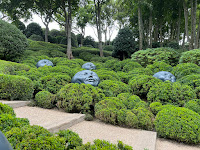
Bottom: Scenes from Normandy. Jardin d'Étretat, Niemeyer Fountain Le Havre, Monument L'Oiseau Blanc in Étretat, Le Havre - Catena Containers Sculpture by Vincent Ganivet.

Motivation


Last week, we traded Lombard skies for 8 days in northern France. We spent 4 days in Honfleur (Normandy) and 4 days in Douarnenez (Brittany). Eight days of “bonjour” and “merci”, fields full of round hay bales, fishing ports, and cider at every meal. We were also looking for cooler weather and Atlantic breezes.

During our French getaway, we found that instead of comparing France against the USA, we couldn’t help but compare it to Italy, our adopted home, and particularly Bergamo. That unexpected lens turned even mundane things we saw or experienced into moments for reflection.

The last time we were in Normandy was in 2006 and at that time the focus was to see the Bayeux Tapestry, the D-Day beaches, and Mont St. Michel. We took part of a day back in 2006 and visited Honfleur and the Satie Museum. It was a dark and rainy November day. The town seemed to be asleep, and we didn’t do a lot of touring around, but the place left an impression on us.

Speaking of impression: we still talk about the Satie Museum to this day. We entered the museum (back in 2006) and surprised the person running the place. He and the museum seemed to be sleeping when we arrived. After taking our money, in my memory he flipped on a switch and the museum roared to life. We were the only people there. Every room in the old house was based on a different color and piece of music at least was we remember it.

We did not dare try to repeat that magic of that moment at the Satie Museum, so we did not go there on this 2025 trip.

Our motivation for our France trip was to explore Honfleur and nearby areas more thoroughly in better weather, like the Cliffs of Étretat. We also wanted to make our first foray into Brittany, which has always intrigued us as a place to visit.


Itinerary


We flew into Paris Beauvais airport and rented a car. We drove to Honfleur and stayed there four nights. Then we drove to Douarnenez (Brittany) and stayed there 4 nights. The last day was a marathon drive of about 8 hours from Douarnenez back to Paris Beauvais. This included stops.

(By the standards of one German couple from Hannover that we met in Douarnenez, our last day’s marathon drive was peanuts. They were driving 15 hours in one swoop. To each his own.)

The drive from Honfleur to Douarnenez was fine. We had a long lunch stop in Dinan, a fascinating town that was approximately midway. On our return to Paris Beauvais airport, in hindsight we would have planned a stay for 1-2 nights, say in Caen or some small village.

That said, driving in these parts is made easier by numerous rest-stops (called “aire”). We saw families picnicking in these places so I think long drives are not that unusual in northern France. You just plan around it and stop a lot.

Tip: We drove on some tolled roads that you had to carefully look for signs that instruct you to go to sanef.com site to pay tolls. In our case, we were on the A13, which uses this free-flow tolling method, i.e., no toll booths. Our rental agency didn’t point that out to us.

Honfleur


Honfleur is a town in Normandy of around 8,400 people on the southern bank of the Seine Estuary, where the Seine River empties into the English Channel. This was our Normandy part of the trip where we were based for 4 nights.

  • Day 1 – Arrive, walk the town, Église Sainte Catherine, dinner.
  • Day 2 – Honfleur day: Panorama du Mont-Joli, Chapelle Notre-Dame de Grâce, Le Jardin des Personnalités, La Mora.
  • Day 3 – Le Havre day: Église Saint-Joseph, Museum of Modern Art André Malraux, Le Volcan, City Center.
  • Day 4 – Head to Étretat: Monument "L'Oiseau Blanc" - Nungesser et Coli, Jardins d'Étretat, Cliffs of Étretat north and south.

On day 2, we decided to leave the car parked and explore on foot all the places listed above, in that order. The Chapelle Notre-Dame de Grâce was very peaceful when we visited around 10 am and it was a pleasure to linger inside staring at all the naval themed artwork including the model boats hanging from the ceiling. Be sure to check out the interesting system of bells that are mounted on the ground by the side of the church. Don’t worry, they’ll remind you that they are there every 15 minutes.

After this chapel, we made our way down to Le Jardin des Personnalités. This garden has what we’d call little “rooms” featuring the busts of a famous people whose life in some way intersected with Honfleur. There are descriptive signs about the different people, but this is a great use of asking questions to your AI assistant of choice.

One person we came across in the garden was Lucie Delarue-Mardrus (1874–1945), an acclaimed poet, novelist, and sculptor from Honfleur. She was a writer of verse, fiction, travel memoirs, and children’s tales, celebrating love, nature, and her Norman roots. She was also quite progressive for her time. Look her up! La Maison de Lucie hotel bears her name and is where we stayed while in Honfleur. We highly recommend this hotel and loved the staff!

The Mora museum – it doesn’t officially call itself a museum, but we will – is a short walk from the city center. At the museum there is an audio-visual experience about William the Conqueror. You remember him from all the school history quizzes, right? He’s the guy who landed in in England in 1066 and defeated King Harold II at the Battle of Hastings, after which he was crowned King of England on Christmas Day 1066.

Besides the audio-visual experience and more interesting in some ways is the effort to rebuild William the Conqueror’s ship called “La Mora”. The worksite where they are building the ship, is an intergral part of the museum visit and shouldn’t be missed.

We learned a lot about history and the Viking roots of Normandy visiting this museum. Did you know that Normandy literally means “land of the Northmen” – where they came from – and William was descended from Rollo, a Viking leader who became the first ruler of Normandy?

Food-wise in Honfleur, we had wonderful baguette/butter/jam breakfasts at our hotel and lunch and dinners out. We ate twice at the exceptional Restaurant Boulangerie Pâtisserie SaQuaNa. We had lunch there and then immediately booked dinner for the following night. In general, we didn’t need reservations on this trip, but SaQuaNa was an exception. Yes, it’s that popular but worth it. We also ate at Restaurant Tourbillon and La Cidrerie, both in Honfleur center and both were nice but our nod goes to SaQuaNa.

Le Havre


Le Havre sits on the other side of the Seine from Honfleur and doesn’t seem to be quite as famous as Honfleur, at least in our minds. Once we learned that Le Havre’s city center is a UNESCO site, we just had to go visit. The two cities are connected by the beautiful Pont de Normandie, at 5,90 euros a pop to cross.

We arrived in Le Havre on a Sunday, the day before Bastille Day and the city was unusually quiet. We felt like we walked into a Giorgio de Chirico painting with empty, geometric, and desolate spaces. For example, we walked around the complex called Le Volcan (The Volcano) in center city and we saw maybe 2 people as we wandered around large white cone shapes resembling volcanoes. Out of the bigger volcano, a large hand reaches out surreally as if to offer you something. It’s the Niemeyer hand fountain.

The city of Le Havre was severely bombed during the Second World War. 

Hitler had declared Le Havre a Festung (fortress), ordering it to be defended to the last man. The city was heavily fortified with bunkers, anti-tank ditches, and over 11,000 German troops. To minimize Allied casualties and break German resistance, the British Royal Air Force (RAF) launched massive air raids. Between 5–12 September 1944, RAF Bomber Command dropped over 9,600 tons of bombs on the city. 80% of the city was destroyed.

The city was rebuilt according to the plan of a team headed by Auguste Perret, from 1945 to 1964. He was a one of the pioneers of reinforced concrete architecture. There is a unity in the construction and layout of the city that is pleasing yet let's say odd. It's hard to explain but better to experience. We think that the city is missing green: trees and small green spaces, which would really help.

The Église Saint-Joseph in Le Havre also designed by Perret is worth a visit. It really is an interesting church and space.

For our day in Le Havre, we had a fun lunch at the curious Calice Et Mandibule. We tried a baobab peanut butter dessert there that was delicious.

As we drove back over the Pont de Normandie to Honfleur, we talked about the contrasts between the two cities, and the “havres” and “havres not”.

Alabaster Coast


There are a lot of options to consider for exploring the Normandy coast around Honfleur. We wanted an hour or less drive, so we thought about whether to visit to the north of Honfleur, Étretat (postcard white cliffs) or Fécamp (more of working village). We chose the former.

To the southwest of Honfleur, there is the much talked about duo Deauville (glamorous) and Trouville (laid-back). We skipped these entirely this visit.

So Étretat it was. It was also Bastille Day, an important holiday in France. In terms of travel, you say Bastille Day in France is like Independence Day in the US or Ferragosto (August 15) in Italy.

Despite the holiday, it wasn’t too bad getting around. The cliffs of Étretat will always be full of people. It’s just that kind of place. And the cliffs were beautiful, but we were more impressed with the Les Jardins d'Étretat, which give you some pretty nice views as well.

The garden is called a neo-futuristic garden (meaning?) perched atop the cliffs on the north side of town. The trail that takes you on the cliff walk to the north of town takes you right to the entrance of these gardens. The gardens started their life in 1905, when a famous Parisian actress Madame Thébault built the villa and planted the first tree.

The location of the garden is nearby the famous Falaise d’Amont. (Falaise means “cliff”.) The coast from Le Havre to Le Tréport (further northeast from Fécamp) and including Étretat is often referred to as the Alabaster Coast.

The garden today is largely the result of a 2016 intervention by landscape architect Alexandre Grivko who reimagined that original plot, crafting the current layout that weaves art, geometry and natural heritage together. To this point, there are some interesting pieces of art in the garden and some not-so-interesting pieces – in our humble opinion. Still, it’s definitely worth a visit for what they’ve created there.

Besides the garden, we really liked the Monument "L'Oiseau Blanc", nearby the garden. The monument honors Charles Nungesser and François Coli who took off from Paris on 8 May 1927 aboard the Levasseur PL.8 biplane L’Oiseau Blanc. They were attempting to make the first non-stop transatlantic flight from Paris to New York. Their aircraft was last sighted flying low over Étretat’s cliffs before disappearing, and their loss remains one of aviation’s great mysteries.

Why were they trying to do this? To win prize money. In May 1919, New York hotelier Raymond Orteig offered a $25,000 award to the first aviator(s) flying nonstop between New York and Paris (in either direction). The victor would be none other than Charles A. Lindbergh. On May 20–21, 1927, he flew solo from Roosevelt Field (Long Island) to Le Bourget (Paris) in his single-engine Spirit of St. Louis. Covering roughly 3,610 miles in 33 hours 30 minutes, Lindbergh clinched the Orteig Prize and the rest is history.

In Étretat, we had a very pleasing lunch of moule frites at La Flottille. We would go back to this town just to have that meal again!  


Chapelle Notre Dame de Grâce - Honfleur La Mora - reconstructing the ship Le Havre, France Hotel La Maison De Lucie - Honfleur
Chiesa di Santa Caterina (Honfleur) Le Jardin des Personnalités - in Honfleur - Erik Satie Le Jardin des Personnalités - in Honfleur - Lucie Delarue-Mardrus 
Jardins d'Etretat - Salcedo faces 2 Jardins d'Etretat - Samuel Salcedo faces Jardins d'Etretat view over city - sculpture by Gevorg Tadevosyan 
Top row: Chapelle Notre Dame de Grâce - Honfleur, La Mora (Ship) in Honfleur, Buildings in Le Havre, a room a Hotel Maison de Lucie in Honfleur.
Middle row: Chiesa di Santa Caterina - Honfleur, Bust of Erik Satie and Lucie Delarue-Mardrus in Le Jardin des Personnalités - Honfleur.
Bottom row: Scenes from Jardin d'Étretat including work (faces) by Samuel Salcedo and work (hoop) by Gevorg Tadevosyan. 

Douarnenez


After our stay in Honfleur, we drove to Douarnenez in Brittany, with a stop in Dinan. The dividing line between the regions of Normandy and Brittany is the Couesnon River the empties into Mont St. Michel tidal bay. Dinan is in Brittany.

Why Douarnenez? Douarnenez was suggested to us by a friend familiar with the area. We had done a bit of research on the region and realized there were many good choices for us to be based. Our friend’s suggestion won the day.

We knew from the start – based on the distances and the beautiful but tangled network of roads in Brittany – that getting around would be slow. And that largely turned out to be true. Given that we didn’t try to see everything to avoid lots of driving. Our rules of thumb on driving are this: 1) if we are based in an area for a few days, we try to alternate days so if we drive one day, we don’t drive the next, and 2) if we drive, we try to limit it to under two hours total for a day. So, after the drive from Honfleur, the next day for us was all about walking an exploring Douarnenez.

Our itinerary for our time in Douarnenez:

  • Day 1 – Arrive late, night walk in town, dinner.
  • Day 2 – Douarnenez: Plomarc’h walk, Gallo-Roman garum production site, explore waterfront, visit some churches, eat our first kouign-amann, Plage du Ris, Plage De Saint Anne La Palud.
  • Day 3 – Day trip to the coast, and hike from Pointe du Vin to Pointe du Raz and back.
  • Day 4 – Douarnenez and environs: Covered Alley of Lesconil, Sables Blancs Beach, Shopping at La Maison de la Sardine, Locronan exploration and dinner.

Sardines and garum


One fascinating spot in Douarnenez is the Plomarc'h Pella, Gallo-Roman garum archaeological site on the edge of town. This is where salted fish was prepared along with garum for centuries. From the sign at the site:

THE SALT FISH INDUSTRIAL COMPLEX OF PLOMARC'H PELLA (1st to 4th Century AD) The Roman salt-fish industrial complex at Plomarc'h Pella is the largest of its kind discovered to date in the bay of Douarnenez. It comprises four buildings constructed both in the bottom of a small valley and on the slopes either side. One of the buildings has been partially restored, and is open permanently to the public. The quality of its preservation and its completeness make it an exceptional example dating from the roman period. Roman occupation first occurs on the site during the 1st century AD but it was not until the beginning of the 2nd century AD that it was developed as an industrial site.

Garum was a fermented fish sauce that was the ancient Roman empire’s go-to condiment. Garum was made from made from fish guts, salt, and sometimes herbs. It has a lot of umami. Though garum faded after the fall of Rome, you can get an idea of what it’s like with the modern-day Italian condiment called colatura di alici, as well as similar condiments in other cultures.

One of the key salted fish species prepared at the complex in Douarnenez was sardines. In fact, the history of Douarnenez is intimately connected to sardines and sardine fishing. There are informational panels all throughout the city that are part of the “Le chemin de la sardine” (Sardine Path) that you can follow and learn about sardines and key events in the city’s history.

Why do sardines like the Bay of Douarnenez? A goldilocks situation of the right food (zooplankton and phytoplankton), the right depths, and sheltered environments. If you want to try some of these sardines, there are many places to get them in Douarnenez. We suggest the La Maison de la Sardine. They have a good selection and an interesting video to watch about sardines and the history of Douarnenez. (The nearby Le flimiou is great for lunch!)

And, if you are really into sardines and the history of Douarnenez, you can check out the Statue de la femme sardine – a statue that is half sardine half woman. But beware, you can only reach the statue at the lowest tide. We were off by a few days and could only gaze at her/it from the city walls.

When you are done thinking about fish, make sure you try kouign-amann, a Breton laminated dough pastry, made with bread dough, butter, and sugar. It’s filling, so maybe split one with your bestie or you’ll ruin your dinner. We picked one up at the Boulangerie Des Plomarc'h.


Places and Names


We are slow learners, but occasionally we even surprise ourselves. Case in point: we kept noticing that many towns around Douarnenez started with “Ker”. Were we imagining it? No! According to the informative page Uncovering the Stories Behind Breton Place Names, “Ker” means “village” in Breton, as in Kerlaz, Kerfany or Kermaria, which translate as “Laz’s village,” “village of the fountain” and “Mary’s village,” respectively.

One day during our stay in Douarnenez, we took a drive out to Pointe du Van. That’s where we started wondering about the “Ker” in names. And don’t you worry, we honored our 1-hour drive time rule of thumb.

From Pointe du Van, we hiked to Pointe du Raz and back. About 15 km. On the subject of names, the Pointe du Raz headland gets its name from the Raz de Sein, the treacherous channel between the point and Île de Sein that can be seen offshore. The word raz comes from the Old Norse “rás”, meaning strong current or race of water and is related to the English word “race”, as in a fast-moving tide. So, Pointe du Raz literally means “Point of the Current”, reflecting its history as a place known for violent seas, swirling tides, and shipwrecks. In fact, standing on the point, you can see how turbulent the water is.

Brittany is a treasure trove of Neolithic architecture—its moors and coastal plains are dotted with menhirs, dolmens, and other ancient stone structures from over 6,000 years ago. Besides menhirs (standing stone), and dolmens (stone tombs), there are cairns (piles of stones), tumulus (earth-covered burial mounds), cromlechs (stone circles or rectangles), passage graves (tombs with narrow corridors), and covered alleys (large stone corridors). The biggest concentration or neolithic architecture is in the Morbihan department in southern Brittany, around Carnac. Douarnenez to Carnac is over 1.5 hours one-way in car, so we left that area for another time and did not focus a lot of neolithic architecture except for the Covered Alley of Lesconil, which is just a few minutes outside of Douarnenez center. Lesconil is tucked in between wheat fields in a copse of chestnut trees.

The megalith tomb in Lesconil is a gallery grave dating back to the end of the neolithic period between 3,500 and 2,000 BC. Today, we only see large stone slabs creating an A-shaped corridor, but in its time the structure was covered by a mound or cairn forming a tumulus. The corridor formed by the slabs is over 12 meters long, 2 meters wide and 2 meters tall. These tombs were likely the center of religious, social and political life and probably hosted the remains of the most notorious persons of the community like chiefs, priests or warriors.

Leaving Lesconil, we couldn’t help but take a few heads of the ripe wheat and liberate the wheatberries into the palm of our hands and gently blow on them to remove the chaff. Didn’t know wheatberries tasted so good as is.  

A field of grain in Brittany Fields with hay bales in Brittany Wheatberries
Covered Alley of Lesconil (near Douarnenz) Église Saint-Germain de Kerlaz Site de Plomarc'h Pella (vestiges gallo-romains)
Plage De Saint Anne La Palud (Brittany) Beach near Pointe du Raz (Brittany) Moulins de Trouguer (Pointe du Vin)
Top row: Wheat fields in and around Douarnenez and wheatberries in hand.
Middle row: Alley of Lesconil. A church kin Kerlaz, Site de Plomarc'h Pella (vestiges gallo-romains).
Bottom row: Plage De Saint Anne La Palud (Brittany), Beach near Pointe du Raz (Brittany), Moulins de Trouguer (Pointe du Vin).

Le fin: France filtered through Italy


Food envy


During our 8 days in France, we found ourselves delighted—and admittedly a bit envious—of the sheer diversity of flavors and presentations. Maybe it was the magic of vacation eating, but every plate felt special. To us, there was a much larger variety of foods and preparations to choose from than we are used to in and around Bergamo. Yes we were eating out more and perhaps wider ranging than we might at home. But it was in restaurants (and cafés, bistros, etc.) where we found so much more choice. Again this is our opinion, not scientifically proven. And, dishes were typically artfully presented with contrasting flavors, textures, and colors. Vegetables were more plentiful. 

Every Italian region has its base ingredients, traditions, and dishes. Last month for example, we were in Valtellina and almost every restaurant, trattoria, osteria, and rifugio we visited had its version of pizzoccheri. (See the post The Many Faces of Pizzoccheri.) Few of the pizzoccheri dishes veered very far from the standard way of preparing it. That was quaint and reassuring but felt constrained especially when there might be only two entries on the menu and pizzoccheri was always one of them and tagliatelle was the other. (If the tagliatelle was house made, that always won out for us.)

Let’s take crêpes, savory (galettes) and sweet, that we saw on our trip in France. The crêpes we had were a vehicle for a lot of creative combinations of ingredients. The savory crêpes were often served with a salad. It was a meal. It’s a basic preparation but with lots of twists that keep it interesting.

Savory crêpes are typically made with buckwheat flour, which is also an important grain as well in Valtellina (pizzoccheri are made from 75% or so buckwheat). Yet, in the Valtellina, crepes are more a niche item and typically are served with just cheese – our recollection here. Meanwhile, in the north of France the crepe has evolved into a more robust culinary tradition.

Food - Sweet crepe in Honfleur at La Cidrerie Food - Savory crepe in Honfleur at La Cidrerie Food - Risotto with Japanese rice - Honfleur - SaQuaNa Food - desserts in Honfluer at SaQuaNa
Food - Petits Plaisirs Food Truck Douarnenez Food - Pesket - Fish and chips - Douarnenez Food - dinner at Ar Maen Hir Locronan Food - Monseiur Papier smoked fish dish - Pointe du Raz
Food - Moule frites in Etretat Honfleur - a colorful dish in Le Havre at Calice et Mandibule Food - dinner in Honfleur Food - A dish in Dinan at Colibri
Top row: Sweet and savory crepe in Honfleur at La Cidrerie, Risotto with Japanese rice and dessert options - Honfleur - SaQuaNa, 
Middle row: Petits Plaisirs Food Truck and Pesket Fish and Chips in Douarnenez, a plate at Ar Maen Hir Locronan, smoked fish at Monsieur Papier (Plogoff).
Bottom row: Moule frites in Étretat at La Flotille, a colorful dish in Le Havre at Calice et Mandibule, a dish at Tourbillon in Honfleur, a dish at Colibri in Dinan (great tasting menu here).

Country and town


We had three big drives on our trip. One from Beauvais to Honfleur (~ 170 km), one from Honfleur to Douarnenez (~ 430 km), and one from Douarnenez back to Beauvais (~ 630 km). We saw a lot of beautiful countryside.

We saw a lot of fields of grain, often mowed and punctuated with round hale bales. Those bales against a blue sky never tire us for photos. We drove through countryside that seamlessly led us to a small town. Pass by the granite-block church with its lichen blotches, and we were back in the country.

The flow from outside town to inside town – and we are talking about smaller towns here – was smooth and thoughtful. Road design prompts drivers to slow down. Traffic calming measures included speed humps and bumps and tables (doubling as pedestrian crossings), chicanes and lane shifts, and pinch points. None of these calming measures felt artificial or annoying. It felt light years ahead of what we see in our part of Italy. The only traffic control on our beloved Via Pignolo is us screaming and waving at cars going too fast. For the parts of the city we walk in Bergamo, we wish they could implement some of what we saw and experienced in France to slow drivers down.

When going countryside to town to countryside we often saw town’s name signal that we were "entering” and "leaving” that town. So far, so normal. But every so often (1 out of every 15th town?) we noticed that the sign of the town was bolted on upside down. Huh? We thought at first that it was a mistake. But then it became frequent enough that we started asking questions.

It turns out the flipped town names are a form of symbolic protest. The movement began in Tarn, Occitanie, and spread nationwide, with Brittany and parts of northern France having the most flipped signs. The upside-down signs represent how farmers feel their world has been turned on its head: rising fuel costs, delayed EU subsidies, increased bureaucracy among other complaints.

Maybe we should flip some Bergamo’s signs to protest lack of traffic calming measures.


Le Haut-Corlay (Brittany) - protest flipped sign Cast (Brittany) - protest flipped sign A calvaire—a type of wayside cross A building facade in Douarnenez
Two upside down signs in Brittany, a calvaire (cross), and a facade in Douarnenez.

Slow tourism


Honfleur was lively during our visit, thanks to Bastille Day weekend. Even so, the bustle felt contained, and by the next morning, the town had exhaled back to its usual rhythm. Douarnenez, by contrast, seemed to operate on an entirely different frequency—quieter, slower, and decidedly not fussy.

The beaches along Brittany’s Bay of Douarnenez caught us off guard. Huge stretches of sand, with few people. At least the few beaches we saw had no rows of umbrellas, no blaring Euro-disco music, just open sand and water. It was refreshing to see.

(There were a few beaches nearer to Douarnenez that were busier with families. They are easier to get to, have more facilities, and usually a lifeguard. That makes sense.)

Driving in and around Douarnenez was effortless. The village still felt authentic as a working harbor. Parking was easy, restaurants available without reservations, and the mood unhurried.

Back here in Lombardy, it’s a pretty sure bet that budget airlines like Ryanair have contributed to the volume of tourists we currently see in Bergamo. And it’s not just that numbers increase, but the type of tourist changes and quality of life is impacted for locals. 

For example, the energy in Bergamo’s upper city is this these days: people wandering around with large plastic cups of orange spritz dragging their luggage over on cobblestones of the decumanus maximus. It’s dynamic, but sometimes we miss the quieter days. It raises questions about how tourism can shape a place—and how places shape the traveler in return.

But what does dragging luggage around with a spritz have to do with type of tourist we mentioned? We assert that the tourists of recent years spend less time visiting and more time passing through. From our observations, these visitors are likely spending just one night. We’ve been behind them in the checkout at a supermarket getting sandwiches and food instead of eating in a restaurant or other local establishments. 

Then there is the quality of life for the people living in Bergamo. After spending our first few years in Bergamo in a palazzo with several Airbnbs (some illegal), we can say it sucks for the non-tourist. Plus, when you start hearing about and meeting people who can’t get an apartment in the city because many apartments are Airbnbs, it makes you think twice about finding a balance. (We are using Airbnb in the generalized sense to represent any short-term rental or holiday lodging.) When one eating establishment we used to frequent shuffled their menu to accommodate eastern European taste buds and removed our favorite item, we felt a little miffed. This is getting personal.

So, we were talking about France here, right....

Ah yes, a place like Douarnenez seems to have resisted this degree of frenetic tourism. We didn’t see luggage being dragged or one spritz being consumed! Maybe Douarnenez is not discovered or not a desirable destination. But we wonder if it something else may be going on. To get to Douarnenez and similar towns in Brittany, it asks more of the traveler: more time, more intention. The people we saw there seemed to be there for more than for more than one night. In that case, that extra intention is more a net positive to the vibe of a place,  right? We kind of think so. More slow tourism please. A pace dictated not by flight schedules, but by the seasons and tides.


Falaise d'Aval as seen from Étretat Part of the Alabaster Coast Near Étretat Chapelle Notre-Dame-de-la-Garde - Étretat
Plage de la Baie des Trépassés - Plogoff, France Le Vorlen port - Near Port du Raz Port Rhu - Douarnenez 
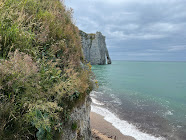
Top row Normandy: Falaise d'Aval as seen from Étretat, Alabaster Coast near Étretat, Chapelle Notre-Dame-de-la-Garde - Étretat.
Bottom row Brittany: Plage de la Baie des Trépassés - Plogoff, France, Le Vorlen port - Near Port du Raz, Port Rhu - Douarnenez.