


Upper left: Tokyo, View near Sakurada-mon of Kokyo Gaen National Garden.
Upper right: Kyoto, Arashiyama Bamboo Forest.
Lower left: Kamakura, Hase-dera Temple.
Lower right: Kyoto, A path on Fushimi-Inari.
Lower right: Kyoto, A path on Fushimi-Inari.
Overview
Itinerary
Our itinerary was planned by us and tailored for our type of travel, which is stay longer, go slower and deeper if possible. While it’s tempting with the bullet train in Japan to cover great distances in a short time. Resist!
Our stops in order where:
- Tokyo – 6 nights
- Takayama – 4 nights
- Kyoto – 7 nights
- Kamakura – 3 nights
We flew into Narita and out of Haneda (both serve Tokyo). All of our transportation other than flights in and out of the country, were on trains/metro (mostly), bus (more in Kyoto), and an occasional taxi here and there. In the Q&A section, we cover some of the details of train tickets.


Left: A overview of our train travel. Made with JR fare calculator.
Center: A heat map of the places visited with numbers indicating how many places we saw, ate at, or visited. Data from our Scrapbook project.
Center: A heat map of the places visited with numbers indicating how many places we saw, ate at, or visited. Data from our Scrapbook project.
Right: A racoon dog statue that can be commonly found near front doors of homes. Brings good luck.
Preparation
The research paid off and had a funny path. Before any research, Japan lived in our minds as fantastical and exotic. As we started our research, Japan became more normal, quirky, and at times, slightly strange. As we continued with our research, we came back to a happy middle neither romanticizing nor nitpicking.
Here’s what we read to prepare:
- “The Beauty of Everyday Things” (1933 - 1960) by Soetsu Yanagi
- “A Beginner's Guide to Japan: Observations and Provocations” (2020) by Pico Iyer
- “In Praise of Shadows” (1933) by Jun'ichirō Tanizaki
- “Lonely Planet Japan” (2024)
- “Fodor's Essential Japan” (2022)
- “Japan Travel Guide 2024: Your Stress-Free Travel with Practical Itineraries, Local Secrets, and Complete Transport Details (2024-2025)” by Hana Takashiro
- “Norwegian Wood” (1987) by Haruki Murakami
The most useful resources for us were “A Beginner’s Guide” and “In Praise of Shadows”. Sure, the guidebooks like Lonely Planet and Fodor's are useful for practical details, but the two mentioned books really stay with you.
“Norwegian Wood” we finished midway through the trip. We felt for years that we ought to read something by Murakami and this was as good as a time as any. We didn’t hate the book but did really love it either. We did appreciate the references to places in Japan, especially in Tokyo that we could imagine and in some cases had been to.
“The Beauty of Everyday Things” and “In Praise of Shadows” may seem like odd travel preparation resources, if not a little dated. These books were recommended by friends who visit Japan often and we trusted their advice.
Reading "The Beauty of Everyday Things" inspired us to visit the Japan Folk Crafts Museum in Tokyo.
One area where had a huge hole in our knowledge was in the basics of Buddhism and Shintoism. While we got a good introduction to these belief systems while in Japan, it would have helped to have prepared some more to make our temple and shrine visits richer.
Finally, we watched many YouTube videos about Japanese history and how to use trains in Japan. Yes, YouTube can be a time suck but in this case it helped.
One area where had a huge hole in our knowledge was in the basics of Buddhism and Shintoism. While we got a good introduction to these belief systems while in Japan, it would have helped to have prepared some more to make our temple and shrine visits richer.
Finally, we watched many YouTube videos about Japanese history and how to use trains in Japan. Yes, YouTube can be a time suck but in this case it helped.


Books used to prepare for a trip to Japan.
On Cleanliness


%20-%20Asakusa.jpg "Day 05 Tokyo lunch at Funachu (Unagi restaurant) - Asakusa")



.jpg "Kyoto - Shokudo Endo (Seafood donburi restaurant)")


On Spirituality
* To say that temples and shrines are everywhere in Japan is an understatement. It got to the point that we had temple/shrine fatigue. Then, we thought abut it for a bit and arrived at this advice:
* Shintoism says everything has a soul. We think this helps explain why the cities appear greener than they might be, why things are taken care of and maintained, why places, like a street or alley, are generally taken care of.
On Language
* It helps to devote a little time before going to learn the basics:
* Spend time aiming your phone at text and translating. It helps to have your process be as easy to and as fast to do as possible so that you are ready when in Japan. We used this kind of translation a lot to decipher signs in temples, menus, and general instructions. For example: In Kamakura, we were walking on the Daibutsu Hiking Trail and as we entered forested parts there were warning signs in Japanese and it made sense to not ignore them. In this case, most of the warning signs were “be careful of this” or “don’t do that”. Still, good to know.
* We found that enough English was spoken that you we could get by. In only one case, we used a translator app to talk to someone, but it was in a knife store and the concepts were complex.
* In terms of getting around trains, many of the signs are written in English as well. Also, Google Maps is your friend, it is very reliable. For example, if you need to get from Ochanomizu to Shibuya....put the starting and destination points and in and follow the instructions. Google Maps will even give you the optimal train cars to get on to be near the right exit (which it also indicates).
Here’s what we did and booked in advance. (5 days were programmed out our 20.) This is also a small plug for the wonderful people we met and who helped open up Japan for us.
Tokyo Foodie Tour – Full day private tour
This tour booked through Tours by Locals was a good albeit brief introduction to the Tokyo food scene. We usually try to do any food tour at the start so we can get some basic info that will help the rest of the time. In this tour, we were guided by Eunji. We felt like we were hanging out with a friend the whole day while sampling different food and learning about Tokyo and Japan.


Takayama/Shiragawa-go Tour
This was a tour booked through Takayama and Shirakawa-go One Day Bus Tour from Takayama - Klook Singapore. We were based in Takayama and had arrived the day before the tour and hadn’t seen much of Takayama yet.
The first 1/2 of the the tour takes you through the Takayama Jinya, a historic government building stands out because it’s the only surviving example of its kind in Japan. Originally serving as the local administrative office during the Edo period, offering a glimpse into the way regional governance was organized in feudal Japan.


Views of Shiragawa-go.
Nijo Castle and Tea Tour in Kyoto
This was a tour booked through Tea Ceremony in Half Day Kyoto Tour - Private Tour by Yoriko O. The best private tours in Kyoto. Yoriko was fantastic. We enjoyed how she opened up the tea ceremony for us and we liked her so much, we had lunch with her just to talk to her some more.
Hata and Harie - Rice Terrace, Water Spring tour outside of Kyoto
This tour was booked through YUTour. The owner and guide Seita is incredible. If we go back, would definitely do another one of his tours.
Why did we book this tour? Many years ago, we saw a BBC documentary " Satoyama: Japan's Secret Watergarden” (2006 – 2007) and were fascinated with the area featured (Harie).
%20famous%20for%20waterways.JPG "Day 15 Harie (north of Kyoto) famous for waterways")
%20rice%20cultivation.JPG "Day 15 Hata (north of Kyoto) rice cultivation")


Observations
On Cleanliness
* We saw next to no trash on the street. We were gob smacked on how clean the cities were that we visited. No cigarette butts on the streets and no graffiti.
* Ironically, walking around the cities we visited, there were few if any trash bins to be found on the streets. You might think this would lead to more trash on the streets, but that wasn’t the case. At the end of a day touring around, we found crumpled up bits of paper in our pockets because we had nowhere to dispose of during the day. #FindMeATrashBin
* Bathrooms are everywhere, easy accessed and generally clean. 90% of the toilets we used were in some way automated.
* Walking around Tokyo or Kyoto and going say one street off the main route you are immediately walking by someone's front door. Everything is neat as a pin. There are usually potted plants and small statues (usually of our friend the racoon dog). Residents care about appearances and we found that refreshing.
* Ironically, walking around the cities we visited, there were few if any trash bins to be found on the streets. You might think this would lead to more trash on the streets, but that wasn’t the case. At the end of a day touring around, we found crumpled up bits of paper in our pockets because we had nowhere to dispose of during the day. #FindMeATrashBin
* Bathrooms are everywhere, easy accessed and generally clean. 90% of the toilets we used were in some way automated.
* Walking around Tokyo or Kyoto and going say one street off the main route you are immediately walking by someone's front door. Everything is neat as a pin. There are usually potted plants and small statues (usually of our friend the racoon dog). Residents care about appearances and we found that refreshing.
* Very little smoking and cigarette butts. We went to Shibuya one day while in Tokyo and somewhere near the famous Shibuya Scramble we saw a bunch of people packed behind glass smoking. What we saw was a designated smoking area enclosed by glass partitions. Tokyo’s regulations are designed to minimize both second-hand smoke exposure and cigarette butt litter, so smokers are required to gather in these specific zones rather than lighting up while walking on the sidewalk. Finally, a little respect for non-smokers.
* For more on cleanliness, see the post Japan Trip – A Salute to People We Saw and Cleanliness.
On Politeness
* People wait in lines to board trains or buses. Sometimes, there are marks on the floor to show, for example in a congested station, how to make a snaking line that doesn’t block foot traffic. We were in awe.
* Staff at hotels and restaurants were generally very polite and helpful. (When they didn’t seem helpful, it was more a problem of understanding what was being asked.)
* We passed under several underpasses in cities, which are usually scary and dirty places, not at all in Japan. There were no graffiti or people hanging out underneath.
* We did see isolated cases of someone living on the streets in Tokyo. Someone told us that it would be impolite to bother people if you are living on the street, so coming across them is not as shocking as we’ve experienced say in Seattle. Case in point, we took a walk along the Sumida River going far outside tourist zones and saw a tent or two in areas bordering the river. The tents and surroundings were neat as pin. One had a broom at the entrance of the tent suggesting that the area was cared for and it looked that way.
* On trains and buses, a beautiful silence reigns. No one is sitting next to you watching a video with the volume turned up. And fellow riders are courteous about space occupied and making room for others. Again, we were in awe.
* It was interesting to see how tourists adopted the more polite behavior.
On Politeness
* People wait in lines to board trains or buses. Sometimes, there are marks on the floor to show, for example in a congested station, how to make a snaking line that doesn’t block foot traffic. We were in awe.
* Staff at hotels and restaurants were generally very polite and helpful. (When they didn’t seem helpful, it was more a problem of understanding what was being asked.)
* We passed under several underpasses in cities, which are usually scary and dirty places, not at all in Japan. There were no graffiti or people hanging out underneath.
* We did see isolated cases of someone living on the streets in Tokyo. Someone told us that it would be impolite to bother people if you are living on the street, so coming across them is not as shocking as we’ve experienced say in Seattle. Case in point, we took a walk along the Sumida River going far outside tourist zones and saw a tent or two in areas bordering the river. The tents and surroundings were neat as pin. One had a broom at the entrance of the tent suggesting that the area was cared for and it looked that way.
* On trains and buses, a beautiful silence reigns. No one is sitting next to you watching a video with the volume turned up. And fellow riders are courteous about space occupied and making room for others. Again, we were in awe.
* It was interesting to see how tourists adopted the more polite behavior.
* Masks in public are not uncommon. They are not required. The why is probably a blend of public health mindfulness, cultural values, and social courtesy that predates the COVID-19 pandemic and remains evident today—even in settings like public transit.
On Food
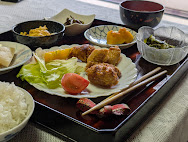
* Japanese cuisine is not only sushi. There are many other choices in the cuisine. In fact, we suggest that you learn the names of types of restaurants before going so you can better navigate what you might want. For example, here are some of the types we tried and certainly not a complete list:
* Eating and walking is frowned upon in Japan. If you get something to eat, you eat at the place you purchased it and dispose of trash there.
* 7-Eleven and other convenience stores can have decent food choices.
* Japanese are masters of taking something and refining it, be it coffee culture or French pastries. When the Japanese do something, they do it well – case in point, coffee. See more below.
* Drink vending machines are always at hand. At first, we looked down on these fixtures of Japanese streets and public spaces, but then we began to appreciate them as a point to stop, buy a drink, refresh, and move on.
* At first, we avoided eating establishments with a line outside. Then we learned, this isn’t all that strange and often, these lines move quickly. Where there was a line, it was typically a place where maybe 1 or 2 people are serving just 4-6 customers. The turnover is quick, so waiting isn’t as bad as it seems.
* One thing that took a while to get the hang of were oshibori (wet towelette) in eating establishments. Often, we were just given an oshibori and no napkins and puzzled over whether to use it right away or save it. You are supposed to – as far as we can tell – use it to clean your hands before eating and then maybe discreetly use it during the meal.
On Food
* Japanese cuisine is not only sushi. There are many other choices in the cuisine. In fact, we suggest that you learn the names of types of restaurants before going so you can better navigate what you might want. For example, here are some of the types we tried and certainly not a complete list:
- Takoyaki (octopus balls) is a popular street food made from wheat flour batter filled with octopus and served with sauces.
- Sushi Restaurants. No explanation needed. Or for sushi with some background, trip REONA Sushi
- Izakayas are informal pubs offering a variety of foods and drinks, often enjoyed after work.
- Kushiage/Kushikatsu involve deep-fried skewers, a popular dining choice where various foods are fried and served on skewers .
- Kissitan is a traditional coffee shop.
- Traditional Japanese Restaurants, Shokudo and Teishoku styles, where set meals are served.
- Okonomiyaki restaurants specialize in savory pancakes.
- Donburi restaurants serve donburi, which are rice bowls topped with various ingredients.
- Tonkatsu restaurants serve breaded and deep-fried pork cutlets.
- Ramen restaurants. Often, there is a kiosk/screen where you order first and then sit down. Your order arrived not long after that.
* Eating and walking is frowned upon in Japan. If you get something to eat, you eat at the place you purchased it and dispose of trash there.
* 7-Eleven and other convenience stores can have decent food choices.
* Japanese are masters of taking something and refining it, be it coffee culture or French pastries. When the Japanese do something, they do it well – case in point, coffee. See more below.
* Drink vending machines are always at hand. At first, we looked down on these fixtures of Japanese streets and public spaces, but then we began to appreciate them as a point to stop, buy a drink, refresh, and move on.
* At first, we avoided eating establishments with a line outside. Then we learned, this isn’t all that strange and often, these lines move quickly. Where there was a line, it was typically a place where maybe 1 or 2 people are serving just 4-6 customers. The turnover is quick, so waiting isn’t as bad as it seems.
* One thing that took a while to get the hang of were oshibori (wet towelette) in eating establishments. Often, we were just given an oshibori and no napkins and puzzled over whether to use it right away or save it. You are supposed to – as far as we can tell – use it to clean your hands before eating and then maybe discreetly use it during the meal.
* We were pleased to find a great coffee culture in Japan. And, the word "specialty" is not abused there or really used as can be in Europe. Their coffee places we tried were all good, some a little bit more than others and those are the ones we call out here. We really liked these places for coffee: Tokyo (GLITCH), Takayama (Falò and EMBER), Kyoto (Ichikawaya Coffee and KéFU STAND), Kamakura (Coffee Talks). All great places.


%20-%20Asakusa.jpg "Day 05 Tokyo lunch at Funachu (Unagi restaurant) - Asakusa")


.jpg "Kyoto - Shokudo Endo (Seafood donburi restaurant)")


On Spirituality
* To say that temples and shrines are everywhere in Japan is an understatement. It got to the point that we had temple/shrine fatigue. Then, we thought abut it for a bit and arrived at this advice:
- These places are oases of green and reflection, a nice place to pause in the city. Some of the most interesting plants and trees are found around temples and shrines.
- Japanese come to temples and shrines to work out a problem, ask for something, or connect.
- Don’t try to understand or intellectualize every temple/shrine you see. Just absorb it. As Soetsu Yanagi says in “The Beauty of Everyday Objects” (p.271) "Those who first grasp an object intellectually cannot hope to comprehend its beauty."
- Avoid the crowded or popular temples and shrines.
- Shrines (神社, Jinja): These are associated with Shinto, Japan’s indigenous religion. Shrines honor kami (spirits or gods) and are often marked by a torii gate at the entrance. Worshippers typically clap and bow when praying at a shrine. Shrines often have guardian animals like foxes or lions. Shrines focus on nature worship.
- Temples (寺, Tera): These belong to Buddhism, which was introduced to Japan from China and India. Temples house Buddha statues, and visitors may see monks performing rituals. Instead of clapping, worshippers bow and pray silently. Temples may have pagodas and incense burners. Temples emphasize meditation and enlightenment. Often temples have an associated cemetery.
- Sometimes, there is a mix of the two or they are side-by-side.
- Traditional cemeteries are almost always associated with Buddhist temples rather than Shinto shrines. This stems from the core cultural and religious beliefs of each tradition. In Shinto, death is considered impure and polluting, so Shinto shrines—places dedicated to celebrating life and nature—generally do not host funerary services or cemeteries. Instead, Buddhist traditions, which offer elaborate rituals concerning death, afterlife, and memorial services, handle most of the funerary practices, and cemeteries are typically located on or near temple grounds.
- We read or heard (maybe the Pico book mentioned above or a YouTube video) that Japanese are born Shinto and die Buddhist as a way of describing these two belief-systems function in Japanese culture.
* Shintoism says everything has a soul. We think this helps explain why the cities appear greener than they might be, why things are taken care of and maintained, why places, like a street or alley, are generally taken care of.
On Language
* It helps to devote a little time before going to learn the basics:
- Hello - kon-ni-chi-wa
- Thank you - a-ri-ga-to-u go-za-i-ma-su
- Excuse me - su-mi-ma-sen
- Good evening - kon-ban-wa
- Dera – Buddhist temple
- Dōri – avenue or street
- Gawa – river, when used as a suffix.
- Higashi – east, as in the Higashiyama part of Kyoto (eastern mountains)
- Ji – Buddhist temple (Sino-Japanese origin)
- Jinja – Shinto shrine
- Taka – high
- Yama – mountain
- Wa - “Japanese” as in “wagyu” - Japanese beef, “wagashi” - Japanese sweets.
* Spend time aiming your phone at text and translating. It helps to have your process be as easy to and as fast to do as possible so that you are ready when in Japan. We used this kind of translation a lot to decipher signs in temples, menus, and general instructions. For example: In Kamakura, we were walking on the Daibutsu Hiking Trail and as we entered forested parts there were warning signs in Japanese and it made sense to not ignore them. In this case, most of the warning signs were “be careful of this” or “don’t do that”. Still, good to know.
* We found that enough English was spoken that you we could get by. In only one case, we used a translator app to talk to someone, but it was in a knife store and the concepts were complex.
* In terms of getting around trains, many of the signs are written in English as well. Also, Google Maps is your friend, it is very reliable. For example, if you need to get from Ochanomizu to Shibuya....put the starting and destination points and in and follow the instructions. Google Maps will even give you the optimal train cars to get on to be near the right exit (which it also indicates).
Tours
We tried to strike a balance between organized events (tours) that gave structure to our days and days of complete freedom to do whatever we wanted. And to be honest, some experiences have to be organized in advance and don’t allow you to book last-minute.Here’s what we did and booked in advance. (5 days were programmed out our 20.) This is also a small plug for the wonderful people we met and who helped open up Japan for us.
Tokyo Foodie Tour – Full day private tour
This tour booked through Tours by Locals was a good albeit brief introduction to the Tokyo food scene. We usually try to do any food tour at the start so we can get some basic info that will help the rest of the time. In this tour, we were guided by Eunji. We felt like we were hanging out with a friend the whole day while sampling different food and learning about Tokyo and Japan.


Takayama/Shiragawa-go Tour
This was a tour booked through Takayama and Shirakawa-go One Day Bus Tour from Takayama - Klook Singapore. We were based in Takayama and had arrived the day before the tour and hadn’t seen much of Takayama yet.
The first 1/2 of the the tour takes you through the Takayama Jinya, a historic government building stands out because it’s the only surviving example of its kind in Japan. Originally serving as the local administrative office during the Edo period, offering a glimpse into the way regional governance was organized in feudal Japan.
The second 1/2 of the tour takes you to the UNESCO designated site of Shiragawa-go, one of Japan’s most enchanting traditional villages, celebrated for its distinctive gassho-zukuri architectural style. Located in the remote, mountainous region of Gifu Prefecture, the village’s name combines "Shirakawa" (which means "white river") with "go" (meaning “village” or “hamlet”). The hallmark of Shirakawa-go is its unique houses with steep, thatched roofs that resemble hands pressed together in prayer (the term gassho literally means “praying hands”). These roofs are ingeniously designed to shed heavy winter snow, ensuring the structural integrity of the buildings in the region’s harsh winter months. Many of these traditional structures, some of which are over 250 years old, were built using methods that forego nails, showcasing exquisite craftsmanship and a deep connection with nature.


Views of Shiragawa-go.
Nijo Castle and Tea Tour in Kyoto
This was a tour booked through Tea Ceremony in Half Day Kyoto Tour - Private Tour by Yoriko O. The best private tours in Kyoto. Yoriko was fantastic. We enjoyed how she opened up the tea ceremony for us and we liked her so much, we had lunch with her just to talk to her some more.
Where you do the tea ceremony varies; we did it at the shop Bikouen, in business for 5 generations. We watched the tea ceremony and then got to try our hands at making matcha tea. It wasn't easy!
Hata and Harie - Rice Terrace, Water Spring tour outside of Kyoto
This tour was booked through YUTour. The owner and guide Seita is incredible. If we go back, would definitely do another one of his tours.
Why did we book this tour? Many years ago, we saw a BBC documentary " Satoyama: Japan's Secret Watergarden” (2006 – 2007) and were fascinated with the area featured (Harie).
Here's some background:
- Satoyama is a Japanese term applied to the border zone or area between mountain foothills and arable flat land. Literally, sato means village, and yama means hill or mountain. Satoyama have been developed through centuries of small-scale agricultural and forestry use.
- In the BBC documentary, they spent a lot of time in the village Harie, in the Shiga Prefecture on the northwestern side of Lake Biwa. What is this tourist attraction in Japan called HARIESTER tap water of the township? The tourist attraction is "Harie Shozu no Sato Kabata" in Takashima, Shiga Prefecture. Harie is known as the "village of pure water" due to its abundant spring water. The term kabata refers to traditional water systems used by households in the area, where fresh spring water flows through small channels and is used for daily activities like washing and cooking.
We went to go see rice fields in Hata and then the kabata in Harie. We ate lunch at the house of local woman, whose kabata was featured in the NHK documentary on the subject. The NHK documentary ("Through the Kitchen Window") inspired the BBC documentary, using some of the same footage.
This was a highlight of our trip!
This was a highlight of our trip!
%20famous%20for%20waterways.JPG "Day 15 Harie (north of Kyoto) famous for waterways")
%20rice%20cultivation.JPG "Day 15 Hata (north of Kyoto) rice cultivation")

Left: Harie stream.
Center: Hata rice fields.
Right: Young rice plants ready for planting.Center: Hata rice fields.


Left: Harie kabata at Joeiji Temple.
Center: Our guide showing locations to be visited along Lake Biwa.
Right: Rice fields in Harie.
Saihōji (Kokedera) Temple
This temple requires a reservation that you can make via temple website. Most temples are free or charge a small entrance fee, and you come when you want. Not the Moss Temple - “Kokodera” translates as “Moss Temple” - is located on western side of Kyoto and is a serene and peaceful place to visit because it is limited and people. It’s also a beautiful place. You have to practice writing a sutra before you enter. Don’t worry, it’s fun!
%20Temple%20and%20moss.jpg "Day 17 Kyoto - Saihōji (Kokedera) Temple and moss")
%20Temple%20and%20moss%20with%20path.JPG "Day 17 Kyoto - Saihōji (Kokedera) Temple and moss with path")

Center: Our guide showing locations to be visited along Lake Biwa.
Right: Rice fields in Harie.
Saihōji (Kokedera) Temple
This temple requires a reservation that you can make via temple website. Most temples are free or charge a small entrance fee, and you come when you want. Not the Moss Temple - “Kokodera” translates as “Moss Temple” - is located on western side of Kyoto and is a serene and peaceful place to visit because it is limited and people. It’s also a beautiful place. You have to practice writing a sutra before you enter. Don’t worry, it’s fun!
%20Temple%20and%20moss.jpg "Day 17 Kyoto - Saihōji (Kokedera) Temple and moss")
%20Temple%20and%20moss%20with%20path.JPG "Day 17 Kyoto - Saihōji (Kokedera) Temple and moss with path")

Photos of Saihōji (Kokedera) Temple in Kyoto - they say there are 120 types of moss there.
%20Temple%20and%20moss%20and%20small%20stream.jpg "Day 17 Kyoto - Saihōji (Kokedera) Temple and moss and small stream")

Saihōji (Kokedera) Temple in Kyoto.
Q&A
Question: Did we buy the JR Pass?
We did not. In our situation, we could have used a 2 week pass at ¥80,000 (Green class ¥110,000) to cover us. We spent about ¥58,000 per person for our bullet trains (green class) and Hida express (to Takayama). The rest was on our Suica cards and was less than ¥10,000. In our case, we spent well under the 2-week pass price. If we had traveled more often and greater distances, the calculation probably would have favored getting the green pass.
To figure out fares, try out the JR Fare Calculator.
Question: What transit card did we use?
Immediately after landing in Narita, we purchased the normal Suica card, not the Suica Welcome card. The Suica card is rechargeable and we could keep them past 28 days anticipating a return to Japan.
To purchase our Suica cards, we went to a machine that took a credit card and got the cards. We used the cards a lot moving around Tokyo. Also, we used our Suica cards on the buses and trains of Kyoto and Kamakura, we bought drinks from vending machines, and we paid for some taxi rides.
We came home with our Suica cards with about 10 USD on each left over. We are hoping to use them again in the future.
We did not connect the cards with our phones. One of us had an iPhone (possible to do) and one an Android (trickier to do). It was easier to just use the physical card in the end.
Question: How did we make train reservations?
As with all things Japan, there are a lot of ways to do this. You could wait until you get there and go up to a ticket counter or machine and make reservations, and you’ll probably be fine and get the routing, class, and seating you want.
Or you could use an app like Japan Travel by NAVITIME, or even Klook.
What we did is reserve the main transfers (Tokyo to Takayama and Takayama to Kyoto) before we arrived using the JR West site. This reservation process givens you reservation numbers that you use when you are on the ground in Japan, either at an appropriate ticket desk or ticket machine (what we did). Important: bring the same credit card you made the reservations with!!
Then, partway through our 21 days, after seeing that our method worked, we booked the rest of the legs of our trip in the same way.


We came home with our Suica cards with about 10 USD on each left over. We are hoping to use them again in the future.
We did not connect the cards with our phones. One of us had an iPhone (possible to do) and one an Android (trickier to do). It was easier to just use the physical card in the end.
Question: How did we make train reservations?
As with all things Japan, there are a lot of ways to do this. You could wait until you get there and go up to a ticket counter or machine and make reservations, and you’ll probably be fine and get the routing, class, and seating you want.
Or you could use an app like Japan Travel by NAVITIME, or even Klook.
What we did is reserve the main transfers (Tokyo to Takayama and Takayama to Kyoto) before we arrived using the JR West site. This reservation process givens you reservation numbers that you use when you are on the ground in Japan, either at an appropriate ticket desk or ticket machine (what we did). Important: bring the same credit card you made the reservations with!!
Then, partway through our 21 days, after seeing that our method worked, we booked the rest of the legs of our trip in the same way.
Question: Is Japan really all about cash?
Yes and no. There were enough places that took credit card that we were pleasantly surprised after all we heard. It seemed all shops we hit took credit cards. That said, there are restaurants that only take cash and at one lunch in Kamakura toward the end of our trip we ran out of cash and had to change our order to match what cash we did have. Always check before sitting down if credit card is accepted. Also, bring your credit and debit cards with you and make sure you have contacted your banks to allow charges from Japan.
Yes and no. There were enough places that took credit card that we were pleasantly surprised after all we heard. It seemed all shops we hit took credit cards. That said, there are restaurants that only take cash and at one lunch in Kamakura toward the end of our trip we ran out of cash and had to change our order to match what cash we did have. Always check before sitting down if credit card is accepted. Also, bring your credit and debit cards with you and make sure you have contacted your banks to allow charges from Japan.
Question: Is 7-Eleven as important as they say it is?
Yes. We went there exclusively to withdraw cash. There was no fee on ATM withdrawals at 7-Eleven. We didn’t verify if this is the case for other convenience stores like Family Mart and Lawson. And, we even had a light dinner purchased out of a 7-Eleven that wasn’t too bad.
Question: Was it hard to plan it yourselves?
No. We started with the cities we wanted to visit, worked out the transportation connections between them and then we were good to go. There is no special knowledge to do this. It’s much harder to figure out what cities and areas will make sense for you. Our advice: don't try to cram everything in. Less is more.
No. We started with the cities we wanted to visit, worked out the transportation connections between them and then we were good to go. There is no special knowledge to do this. It’s much harder to figure out what cities and areas will make sense for you. Our advice: don't try to cram everything in. Less is more.
We did spend a fair amount of time researching what kind of accommodations we wanted, type and location.
Question: Did we use the luggage transport service, takuhaibin?
We didn't use it from Tokyo to Takayama, because in Takayama we were staying in a B&B, and the coordination didn’t work out. Nor did we use the service from Takayama to Kyoto.
Question: Did we use the luggage transport service, takuhaibin?
We didn't use it from Tokyo to Takayama, because in Takayama we were staying in a B&B, and the coordination didn’t work out. Nor did we use the service from Takayama to Kyoto.
However, we did use it from Kyoto to Kamakura and were happy we did. The gotcha was that for the luggage to be there when we arrived in Kamakura, it had to be picked up the day before we left Kyoto, typically by 3pm. So, you have figure out what to carry with you for the time you’ll be without your luggage. Now that we’ve seen the service in action, we would use it more next time.
Question: Was it crowded?
Question: Was it crowded?
It was, but we could always find our own space. We’ll take one example: Fushimi Inari, the iconic mountain shrine area in Kyoto with 1000s of torii. It’s an Instagram staple, a place with many tourists looking for the perfect photo. However, just off the trail, you can find yourself alone in a shrine. For example, we took the train to the Fushimi-Inari station and walked up with the masses. Crowds thinned the higher we went. On our way back we found a different path down to the Tofukiji station (one stop north) where few tourists go. The point is: find a different way and explore the edges.
Ironically, in Tokyo, we had a hotel in the Ochanomizu area / Kanda, which we later learned was one of the least populated districts in Tokyo. We have a sixth sense about these things.
Question: What was the weather like?
We were there for the last 3 weeks of May. We had one day of significant rain in Kyoto but beyond that nothing more than sprinkles. We were lucky.
Most of the time we were in short sleeves and shorts. In the evening, temperatures could be a little chilly, so longer pants and a pullover were helpful. BTW, if you pack clothes that are causal, not sloppy, and respectful, you should be fine. We did notice that if you want to blend in more, choose blues, grays, and muted colors over bright.
Question: What was the toiletries situation like?
Ironically, in Tokyo, we had a hotel in the Ochanomizu area / Kanda, which we later learned was one of the least populated districts in Tokyo. We have a sixth sense about these things.
Question: What was the weather like?
We were there for the last 3 weeks of May. We had one day of significant rain in Kyoto but beyond that nothing more than sprinkles. We were lucky.
Most of the time we were in short sleeves and shorts. In the evening, temperatures could be a little chilly, so longer pants and a pullover were helpful. BTW, if you pack clothes that are causal, not sloppy, and respectful, you should be fine. We did notice that if you want to blend in more, choose blues, grays, and muted colors over bright.
Question: What was the toiletries situation like?
Good. We usually don’t use the toiletries provided in hotels, but on this trip, we made extensive use of them. Product quality was high.
Question: Did we try a ryokan?
Yes. We saved our ryokan – traditional Japanese inn – and its immersive experience for our time Kyoto and only for two nights. After two nights, we changed to another hotel in Kyoto.
We liked the experience, and we would say to try it if you can but not for too long. Even one night might be enough for some. Ryokans typically serve you kaiseki - traditional multi-course Japanese meal – in your room so you get that experience as well. So, we had two kaiseki dinners and you could say our ryokan breakfast (we chose the Japanese style breakfast) were also multi-course and embraced the idea of kaiseki.
We stayed at the ryokan Seikoro.
Question: Did we try a ryokan?
Yes. We saved our ryokan – traditional Japanese inn – and its immersive experience for our time Kyoto and only for two nights. After two nights, we changed to another hotel in Kyoto.
We liked the experience, and we would say to try it if you can but not for too long. Even one night might be enough for some. Ryokans typically serve you kaiseki - traditional multi-course Japanese meal – in your room so you get that experience as well. So, we had two kaiseki dinners and you could say our ryokan breakfast (we chose the Japanese style breakfast) were also multi-course and embraced the idea of kaiseki.
We stayed at the ryokan Seikoro.
Question: Where did we stay in Tokyo?
There is no shortage of choices and Tokyo is very large. If you stay in one place (say Shibuya), you can always reach other sections of the city with transit. We even put points on a map of things we wanted to see thinking then we would pick a hotel that minimized distance traveled but that didn’t really work out because Tokyo is so large.
In the end, we choose the Ochanomizu area, south of the Kanda River and west of Akihabara because to our eye it seemed more sedate and relaxed, with more trees on the streets. We found a decent hotel there so that clinched the deal. Next time, we might consider something near the Meguro River, just north of Meguro City. We walked this area, and it seemed nice as well.
Question: What did we feel like we missed?
A lot but we are not sorry for it. For example, in Kyoto, we never made it to Kinkaku-ji (Golden Temple) or Kiyomizu-dera or Nara. In Tokyo, we had a similar story of missed sights like the Tokyo Sky Tree and one of the teamLab installations. We more than made up for what we didn't' see with what we did see. We focused on less popular sights, side streets, and parks.
We learned that Japan was so rich you can't possibly list all popular sites and just tick them off. You can flag them all as something to possibly see, but once you there, let the magic of the day guide you and not the checklist.
There is no shortage of choices and Tokyo is very large. If you stay in one place (say Shibuya), you can always reach other sections of the city with transit. We even put points on a map of things we wanted to see thinking then we would pick a hotel that minimized distance traveled but that didn’t really work out because Tokyo is so large.
In the end, we choose the Ochanomizu area, south of the Kanda River and west of Akihabara because to our eye it seemed more sedate and relaxed, with more trees on the streets. We found a decent hotel there so that clinched the deal. Next time, we might consider something near the Meguro River, just north of Meguro City. We walked this area, and it seemed nice as well.
Question: What did we feel like we missed?
A lot but we are not sorry for it. For example, in Kyoto, we never made it to Kinkaku-ji (Golden Temple) or Kiyomizu-dera or Nara. In Tokyo, we had a similar story of missed sights like the Tokyo Sky Tree and one of the teamLab installations. We more than made up for what we didn't' see with what we did see. We focused on less popular sights, side streets, and parks.
We learned that Japan was so rich you can't possibly list all popular sites and just tick them off. You can flag them all as something to possibly see, but once you there, let the magic of the day guide you and not the checklist.
Photos
Tokyo


Left: Tokyo Kanda Myoujin Shrine lion.
Center: Tokyo, Otemachi - SUNDIAL by Hiroshi Sugimoto.
Center: Tokyo, Otemachi - SUNDIAL by Hiroshi Sugimoto.
Right: Tokyo - Trees in Meiji Jingu.


.JPG "Day 06 Tokyo Imperial Palace walls and white umbrella (sun shield)")
Left: Tokyo night and Kanda River.
Center: Tokyo - Japan Folk Crafts Museum.
Right: Tokyo Imperial Palace walls and white umbrella (sun shield).
Center: Tokyo - Japan Folk Crafts Museum.
Right: Tokyo Imperial Palace walls and white umbrella (sun shield).
Takayama


Left: Takayama - Soyu Hondo Temple.
Center: Takayama Higashiyama Trail takes you from temple to temple.
Right: Takayama sake factory.


Kyoto


Center: Takayama Higashiyama Trail takes you from temple to temple.
Right: Takayama sake factory.


Left: Takayama - over the Miyagawa River.
Center: Takayama temple tree.
Right: Takayama - Hida Kokubun-ji.
Right: Takayama - Hida Kokubun-ji.
Kyoto


Left: Kyoto - Fushimi Inari.
Center: Kyoto - Hōkan-ji Temple (Yasaka Pagoda).
Right: Kyoto - flower arrangement at Kawai Kanjiro's House.
%20.jpg "Day 12 Kyoto - Toyotomi Hideyoshi (1500s)")
.JPG "Day 14 Kyoto - The House of Namikawa Yasuyuki (1845–1927)")

%20.jpg "Day 12 Kyoto - Toyotomi Hideyoshi (1500s)")
.JPG "Day 14 Kyoto - The House of Namikawa Yasuyuki (1845–1927)")

Left: Kyoto - Toyotomi Hideyoshi Statue at Toyokuni Shrine.
Center: Kyoto - The House of Namikawa Yasuyuki (1845–1927)
Right: Kyoto - Bikouen Tea Ceremony
Kamakura


Kamakura


Left: Kamakura trail.
Center: Kamakura - Big Bronze Buddha.
Right: Kamakura - Rickshaw.
Center: Kamakura - Big Bronze Buddha.
Right: Kamakura - Rickshaw.


Left: Kamakura - Houkokuji Buddhist Temple Bamboo Grove.
Center: Kamakura - Hase-dera irises.
Right: Kamakura - Jōchi-ji Buddhist Temple Tea Room.
Right: Kamakura - Jōchi-ji Buddhist Temple Tea Room.


.jpg "Photo of Pila Ski Area in Late Feb 2025 - Pista 1 Chamolé")
.jpg "Photo of Pila Ski Area in Late Feb 2025 - Staring out over Cogne")
.jpg "Photo of Pila Ski Area in Late Feb 2025 - Platta de Grevon")

.jpg "Photo of Pila Ski Area in Late Feb 2025 - View of Pila from top of Chamolé")
.jpg "Photo of Pila Ski Area in Late Feb 2025 - near the bottom of Couis 1")


