Saturday, November 4, 2023

18 days in Turkey – Some Observations

Aphrodisias - reconstructed entrance - Tetrapylon Cappadocia - Love Valley stairs Istanbul - Galata Tower Istanbul - Yeni Cami Mosque
Left: Aphrodisias - reconstructed entrance - Tetrapylon.
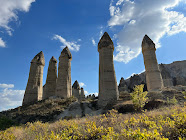
Center left: Cappadocia - Love Valley trail.
Center right: Istanbul - Galata Tower.
Right: Istanbul - Yeni Cami Mosque.

Our recent trip to Turkey in many ways was the classic tour: Istanbul, Cappadocia, and Western Turkey. It was our first trip, so we gave ourselves a pass on being super-creative on the itinerary.

For more on the Istanbul leg of our trip, see Postcards from Istanbul. For a taste of our time in Cappadocia, see Pigeon and Love Valleys and Rose Valley Hikes in Cappadocia.

Some details of the itinerary:

  • We spent 6 days in Istanbul, 4 days in Cappadocia, 3 days in Selçuk and 2 days in Pamukkale. (The remaining days to make 18 were travel days.)
  • Our internal-country flights were from Istanbul to Cappadocia, Cappadocia to Izmir, Izmir to SAW airport.
  • Our entrance and exit point to the country was SAW airport. We departed and returned to Bergamo airport.
  • We rented a car in Cappadocia for a few days and had a car for the Selçuk and Pamukkale part of the trip.
  • All our flights were on AnadoluJet (Turkish Airline brand) and Turkish Airlines. Both were highly professional and efficient.
Notes on the length of time spent:

  • 6 full days in Istanbul was about right for us. We did 2 full day tours (a food tour and historical tour) with 4 days on our own for museums and sightseeing.
  • 4 days in Cappadocia could have been reduced to 3 perhaps.
  • 3 days in Selçuk (Ephesus) was about right. We did the classic full day at Ephesus, then one day at Miletus/Priene, and one day exploring Selçuk museums and then Dilek National Park.
  • 2 days in Pamukkale was about right. (Most might do day trip here, but besides Hierapolis/Travertine Pools, there is nearby Laodicea and a little farther, the amazing Aphrodisias.)

Notes on restaurants and eating:

  • The food was good but more of a commodity than we are used to.
    • Places names are named for what type of food they feature.
    • There was less regional variation in menus than we were expecting. We expected to see different dishes in the four different places we stayed but didn’t.
    • In Italy, you often see “Trattoria Rossi” or “Osteria della Posta”, where you will get something depending on part of the country you are in. In Turkey, you tend to see doner or korokeç or gözleme, the name of the food, maybe followed by the owner’s name.
  • In restaurants, WIFI is usually available and freely shared.
  • Wrapped silverware is common. You order, then wrapped silverware arrives at the table. Napkins are usually already on the table in a dispenser, at least in typical restaurants and not fancy ones.
  • We saw lots of menus with lots of pictures. We joked that we kept choosing restaurants with picture menus but realized the pictures help!
  • Many menus we saw had lots of things on them but only some with prices (written with marker) that typically means the item with no price next to it isn’t available. That took us a while to figure out.

Notes on driving:

  • Cops drive with flashers on (no sound) all the time. Don’t be alarmed.
  • Turkey doesn’t do tunnels (that much). However, travelling from Selçuk to Pamukkale we went through just a few.
  • We like traffic circles. We don’t like traffic circles with traffic lights. They just don’t work! We found a surprising number of complicated traffic circles in Turkey with traffic lights that were hard to see and understand right of way.
  • Traffic lights in general didn’t make sense to us in Turkey. Either they were very long on red or were red in the middle of nowhere when it wasn’t necessary. On a positive note, just before a red light turns green you get a flash of yellow. That is useful.
  • School buses (when not in service) are crazy drivers. Look for “okul tasiti” with yellow and black stripes written on the back of a white van-like vehicle.
  • On many two lane roads in the country or going through cities we joked, “never the right lane”. Why? Because something would always end up in the right lane: a tractor, a sleeping dog, a person in a motorized wheelchair, a double-parked car, etc.
  • Honking is a means of communication – don't be alarmed. Trucks honk greetings to each other.
  • Be prepared for dogs and cats to wander into the road. There are lots of “community” pets (that are well loved and cared for and very sweet) but wander everywhere. We saw many a dog pause in the middle of a busy street oblivious of traffic. Luckily drivers are used to this and stop and beep.
  • There are many roadside fruit/vegetable stands. If you want fresh-squeezed pomegranate juice or a jar of pickled veggies, don’t worry if you miss one stand, you’ll quickly see another.
  • Speed limits changed quickly and in a confusing manner. From 90 km/h (typically non-urban road) to 50 km/h (urban area) and back for no apparent reason. Just keep an eye on the signs and obey them even if everyone is driving faster than you.
  • We saw random checkpoints on roads (police pulling cars over) but we were never flagged down. Don’t know if they knew we were in a rental and let us pass or we were just lucky. They checkpoints looked to be simply checking that documents were in order.
Notes on towns:

  • We weren't afraid on the streets anywhere we went, be it in Istanbul or many of the smaller cities.
  • Turks walk in the street. Heck we even started to once we realized that sidewalks are an obstacle course.
  • The call to prayer was the most noticeable in Istanbul. Maybe there are more mosques or more frequent calls?
  • Each town/mosque had a distinctive call to prayer sort of like a sonic fingerprint.
  • After talking to someone who mentioned that the volume of the calls to prayer is increasing, we realized the potential controlling aspect of call to prayer. In Italy, we have bells, but they generally mark time, call for Sunday mass, or announce a funeral, that is, they are more informational.
  • Smoking everywhere, sometimes in restaurants. Honestly, it wasn’t as bad as we thought.
  • The Turkish people we encountered were kind and helpful.
    • Several times we handled the wrong amount of money over – too much – and people would hand it back and explain the mistake. There was about 30 Turkish Lira to 1 USD when were there and you know how it goes making those calculations in your head at point of purchase.
    • Another example of helpfulness is when we were going to the airport. We hired a private driver to take us to SAW airport. But once in the car and after some time we realized we were going to IST airport. IST airport is in the north and SAW in the south. They are far apart. So, our driver pulls over on the freeway and explains he just can’t turn around and go to the other airport due to contractual issues. But to help us out and gets out of the vehicle and – on the freeway – flags down a taxi. The second one he flagged was willing to take us to the other airport. Our driver (for the wrong airport) even negotiated the price (a fair one) and worked out the details for the taxi ride to the correct airport. We made it to SAW and on time for our flight only by the kindness of that Turkish driver and subsequent taxi driver.
  • We were asked a few times if we were "friends" or "brothers". Didn't know if that was code for something or people were just curious?
  • Atatürk imagery everywhere as Turkey gets ready for 100th year anniversary of the founding of the Republic of Turkey.
  • We didn’t find classically “pretty” towns at least on our itinerary (see above). We drove thru and by a lot of dusty beat-up towns that we couldn’t say were beautiful. They are functional and vibrant places. Even the much-touted Şirince (just inland from Selçuk), we’d say was okay not great.
  • Even in Istanbul, we weren’t wowed by the architecture. Of course, there are magnificent churches, palaces, and such but the whole thing taken together isn’t always aesthetically pleasing.

Notes on flying:

  • We found Turkish airline to be efficient and professional.
  • A few times we heard this strange start of an announcement: “Ladies and gentlemen and dear children...” They didn’t take in account the screaming child behind us who we wouldn’t say was “dear”.


Aphrodisias - stadium Aphrodisias - the blue horse Aphrodisias - theater
Left: Aphrodisias - stadium.
Center: Aphrodisias - the blue marble horse.
Right: Aphrodisias - theater.
Cappadocia - Church in Cavusin Cappadocia - Love Valley penis formations Cappadocia - Old Church in Rose Valley 
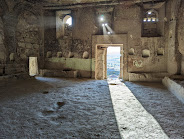
Left: Cappadocia - Church in Çavuşin.
Center: Cappadocia - Love valley phallic formations.
Right: Cappadocia - Church in Rose Valley.

Cappadocia - Paşabağları Örenyeri Cappadocia - Pigeon Valley Cappadocia - Rose Valley 
Left: Cappadocia - Paşabağ Valley or Monk's Valley.
Center: Cappadocia - Pigeon Valley.
Right: Cappadocia - Rose Valley.

Cappadocia - Whirling Dervishes at Saruhan Kervansaray Cappadocia - Zelve Open Air Museum 
Left: Cappadocia - Whirling Dervishes at Saruhan Kervansaray (Avanos).
Right: Cappadocia - Zelve Open Air Museum.

Laodicea - theater
Laodicea - theater.

Istanbul - Galata Bridge over the Golden Horn Dilek National Park - view toward Samos Miletus - theater
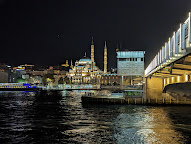
Left: Istanbul - Galata Bridge over the Golden Horn.
Center: Dilek National Park - view toward Samos, Greece.
Right: Miletus - theater.

Ephesus - Library Celsus Pamukkale - Hierapolis Roman Theater Priene - Temple of Athena
Left: Ephesus - Library Celsus.
Center: Pamukkale - Hierapolis Roman Theater.
Right: Priene - Temple of Athena.


Pamukkale - Hierapolis ruins Pamukkale - Travertine Pools Pamukkale - Travertine Pools
Left: Pamukkale - Hierapolis.
Center and right: Pamukkale - Travertine Pools.


Postcards from Istanbul


Overview


When I used to travel, I would diligently send postcards to friends and family. It was a chore but was satisfying when someone mentioned they got one. (My mother saved my postcards and gave them back to me as if she was just holding on to them for me. I never understood that.)

In the last 10 years, I’ve stopped sending cards. It’s a shame because at least when you send a postcard you have to find where the post office is and learn how to buy stamps – with all the adventure and interesting experiences that can bring.

Come to think of it, we saw few postcard kiosks in Istanbul. Maybe the demand for postcards has decreased? Supposing we were to send a postcard, what image or images would we choose? A photo of the Galata Tower, the Galata Bridge, Taksim Square, the Blue Mosque, Topkapi Palace, or the most unoriginal but safe: just the Turkish flag?

Sample postcards


It would be hard to capture the essence of Istanbul in one image or many for that matter. After 6 short days in the city, here are our hypothetical postcards we might have sent, with images and cryptic greetings as we might write them for real.


Postcard - Corn vendor outside of Yeni Cami
Hi Julie! Chestnut and corn on the cob venders everywhere are something we’ve appreciated. (Italy doesn’t do corn on the cob!) We tried the corn once: kind of dry. Maybe a bad selection? We ate it in Topkapi Gardens with a simit (bagel-like) treat.

Postcard - Istiklal Street Scene
Hello family! Istanbul is a lively city, not exactly chaotic but not orderly either. Watch out for the uneven sidewalks! Felt safe the whole time here. The only trouble we heard were cat fights outside our window. A lot of our time here revolved around the Galata Bridge and the famous İstiklal Avenue shown in this postcard.


Postcard - Pope John XXIII statue in Istanbul 
Hi Grandma and Grandpa! We were surprised to learn about the colorful Italian history in Istanbul – for better or worse. We stayed just by the Galata Tower, built by the Genovese. One evening we stopped into the The Church of St. Anthony of Padua (Turkish: Sent Antuan Kilisesi) on İstiklal Avenue. Outside, there is a statue of Pope John XXIII – the Bergamasco pope! He preached for 10 years here while ambassador to Turkey. We can’t escape Bergamo even if we try!


Postcard - Istiklal street trolly with crazy family
Andrew, how are you? You'd love Istanbul. It’s a hilly city! The Fatih and the Beyoğlu districts where we hung out require powering up hills if you are walking. Of course, the transit system can get you to where you want to go efficiently, especially the T1 tram and the historic trolley that runs on Istikal Avenue to Taksim Square. (We saw some crazy tourists directing the trolley to stop where they wanted it for their perfect photo.)


Postcard - Spice Market Postcard - Grand Bazaar 
Hi Mom! This city is one big bazaar. Besides the Grand Bazaar and the Spice Market, you can find everything you need almost everywhere. Not too many pressure tactics to buy. We were told that to buy something, buy it outside the Grand Bazaar because it will be cheaper. The rents inside the GB require higher prices. But still, you must go inside at least once to experience the bazaars.


Postcard - Cat walks over word of Nazim Hikmet Postcard - Cats at the  Suleymaniye Mosque  Postcard - cat with hookah pipe Postcard - cat in store window
Hello Tom. I know you love cats so you will be happy to know that cats rule Istanbul. They are everywhere. Well-kept, fed, and mostly chipped and spayed (we were told) but still, it’s a lot of cats. And there are some dogs, just fewer by our count. I think one memory I’ll have of Istanbul is the smell of cat poop and Friskies (sprinkled on sidewalks). Cats can beg for food too!


Postcard - Minaret Nusretiye Mosque Postcard - Minaret of Yeni Mosque - View from Pandeli restaurant Postcard - Minarets of Suleymaniye Mosque

Postcard - Minarets of Suleymaniye Mosque piercing the sky Postcard - Minarets of the Blue Mosque
Hi Scott....So far, we are not used to the mournful call to prayer over the scratchy, low-quality speaker systems of the local mosque. Maybe in another few weeks we’d stop noticing it? The 6:00 am one is the most jarring. We were told it’s a paid job and it’s live – meaning someone is doing the call to prayer and broadcasting over the speakers placed high up on the minarets. Maybe we need to find and cut those wires?


Postcard - Istanbul Modern Rooftop Postcard - Museum of Innocence
Robert: We are doing well in Istanbul. We found some great modern art museums: Istanbul Modern, Arter. They seem to be relatively new (buildings) with few visitors. We had lunch at the Istanbul Modern and alongside us two huge cruise ships were docked 🙁. Also, we really enjoyed the Museum of Innocence and got introduced to Orphan Pamuk’s book of the same name.


Postcard - rugs we were tempted with
Hi Rona! Be prepared to be offered to buy a rug when you least expect it. For us, it was when we were buying corn on the cob. And, with our guide – who at least asked us and posed it as educational (!). We had an informative visit to a rug shop in Istanbul and learned about knot count and different designs. We resisted and didn’t buy anything and they even gave us a box of Turkish delight. (Julie says they give that to everyone. Leave it to her to ruin the fun 😊.)


Postcard - Basilica Cistern
Terry: Be prepared for long lines in the first half of the day for major attractions. Topkapi palace and the Palace Basilica were insane. Beautiful but crazy in the first part of the day. When will we learned to go after lunch??


Postcard - large cruise ship in Istanbul
Doug, just a note from Istanbul where we are spending 6 days. Be prepared for the docking of huge cruise ships and all that comes with just-here-for-a-few-hours tourists. (I know, how judgmental!) But when you are waiting in line for the Blue Mosque or the Basilica Cistern and there they all are, all 100 cruise-shippers in front of you, with their headphones tuned to some secret guide voice....you sort of wish they would go away.


Postcard - Suleymaniye Mosque
Dad, how are you? We are on our last day in Istanbul. Today, we had a pleasant Sunday walk from the Beyoğlu district to the Süleymaniye Mosque. This was one of our favorite mosques. No line to get in, nice and peaceful. We strolled to Beyazit Square and then back to the mosque to eat at a restaurant just outside the complex KURUFASÜLYECİ ALİ BABA. Get the bean dish!

Postcard - Bayezid II Mosque  Postcard - Yeni Cami
Marianne, wish you were here with us. We visited 6 mosques during our time in Istanbul. The most beautiful to us was the Suleymaniye Mosque. Also seen: Agia Sophia, Blue Mosque, Yeni Mosque, Nusretiye Mosque, and Bayezid II Mosque. I love that in a mosque the construction allows the dome (cupola) to be perceived from almost any position inside. I also love the fact that we take off our shoes and walk around on the plush carpet. Speaking of carpet, notice the pattern and lines in the carpet to help prayers orient and position themselves.


Postcard - Taner Ceylan (1967) - 1553 (2012)
Hi Family! I kept seeing men walking the streets of Istanbul with red, irritated heads like they just had an operation. Sometimes with bandages. Sometimes carrying an umbrella to shield themselves. Upon closer inspection, we realized they were hair transplant patients. Medical tourism especially for hair transplants is big here. Couldn’t find a hair transplant postcard so instead here’s a painting from the Istanbul Modern that caught our eye. It’s by Taner Ceylan (1967) and is called “1553” (2012). It’s about Süleyman the Magnificent (him of the mosque) who had his son Prince Mustafa killed. 

Notes on our Istanbul stay


At no time did we feel unsafe. The only “trick” pulled on us was the one we read about in the Lonely Planet guide where a shoe-shine guy pretends to drop his brush waiting for you to pick it up and then you are hooked. It happened to us but we were engaged in conversation and just walked over it. Oops.

Our hotel/apartment had a carboy of water that we used to fill up a pitcher. We did not drink the water from the tap.

We exercised moderate caution when eating and were okay. We skipped trying the raw mussels from the guys selling them on street corners with a little squeeze of lemon. That wasn't too much of a sacrifice. We did go for the roasted corn on the cob. And, we did eat a few salads and here and there and nothing happened. (We say that because a friend warned us several times: “don’t get a salad”.)

We tried five “specialty” coffee places (recommended by European Coffee Trip) and they were so-so or out-and-out bad. They were not like specialty-experiences we had say in Copenhagen or Prague. We decided it would be better to order “normal” coffee or better yet Turkish coffee or tea and do as the locals do. The word “specialty” means nothing now and European Coffee Trip is losing its grip.

Where did we stay? We stayed in the Beyoğlu district. We were a few minutes (walking) from the Galata Tower. It’s a lively section, but we were off on a side street: Ali Hoca Aralığı. We could reach all the major sites on foot. For example, we walked from our apartment to the Suleymaniye Mosque in under an hour, walking across the beautiful Haliç Metro bridge. We took the T1 tram a few times but mostly walked.

Some books we read to prepare for Istanbul:


Our stay in Istanbul was part of a larger trip of 18 days in Turkey. We decided to put the big city experience up front. After Istanbul, we were off to Cappadocia for 4 days, based in Selcuk for 3 days, and finally Pamukkale for 2 days. For more information, see 18 days in Turkey – Some Observations.


Wednesday, November 1, 2023

All Saints’ Day Hike to Canto Basso and Grammar Lesson

View from Canto Basso toward Val Brembana Tracks from Quintino Alto to Canto Basso and back On trail 533 heading to Maresana
Left: View from Canto Basso toward Val Brembana.
Center: The tracks of this hike.
Right: On trail 533 in the Fall.

Duration: 6 hours (includes lunch)
Elevation: 610 m
Length: 15.5 km
Location: Colli di Bergamo

All Saints’ Day is a holiday in Italy. With a day off in the middle of the week for this holiday, an Italian friend proposed a walk together. We ended up doing a loop hike from Quintino Alto (up to Maresana on trail 533) and onwards to Canto Basso. Then, we backtracked to have lunch at Trattoria del Moro (our old standby). 

We drove to Monterosso and parked (with our friend), but you could take a bus there (number 6) or just simply walk from Bergamo (it’s not that far).

Talking with our Italian friend, we got schooled in the use of “chi” versus “quelli che ” and to never use “chi che”, which we did a few times. For example: “C’è chi viene salvato” or “Ci sono quelli che vengono salvati” are fine and both roughly translated as "There are those who are saved". Chi is for singular and quelli che for plural. You never use chi che together like this: “C’è chi che viene salvato”. 

The whole amiable conversation-lesson while walking revealed this to me:
  • If my accent in Italian doesn’t give me away, then
  • My pronunciation and wrong stressed syllables will, and if not that then
  • My word choices and ordering will, and if not that then
  • My subtle use (or lack of) the correct idioms to match the situation, and if not that, finally
  • My lack of cultural literacy and understanding of references I simply missed by growing up elsewhere.
After further thinking about this, I realized that always being a little bit of “stranger” is a superpower. It’s an advantage and I should celebrate it as such. So what if my language isn’t perfect.

 
Tree and fungus Tree and fungus Chestnuts on the ground
Left and center: fungus on trees. 
Right: Chestnuts for the picking.

Start of Via Quintino Alto The trail 533 continues on to Selvino Trail 533 marker
Left: The start of Quintino Alto.
Center: The trail on Canto Basso continues to Selvino.
Right: Trail marker for 533.

Tagliolini ai funghi Piatto bergamasco cassoeula Coppa pera e gorgonzola
Left: Trattoria del Moro - tagliolini ai funghi.
Center: Trattoria del Moro - cassoeula - a typical winter dish in Bergamo. 
Left: Trattoria del Morro - coppa, pera, gorgonzola.