Tuesday, February 16, 2016

CMS Bergamo


Two articles in the L’Eco Bergamo, Bergamo, caccia ai vandali che di notte imbrattano il centro and Via San Bernardino imbrattata, Facebook incastra un graffitaro, mention the tag “CMS” that can easily be seen around Bergamo. One of the kids that make up the “CMS crew” was identified on camera as he wasn’t wearing a hood (incappucciato). Other than that, not much more is said about the ragazzo “boy” caught or the rest of the crew. Is this crew still active? Am I just seeing left over CMS writing? What does CMS mean? It sounds like a syndrome or an computer programming language form 20 years ago.

The article I graffitari a Bergamo in the Bergamopost talks about the balance between art and vandalism. The subtitle of the article is sappiate che è arte riconosciuta, which translates to “know that it’s recognized as art.”

These articles were a way to study some of theItalian nouns and verbs used to describe graffiti and graffiti artists.

Verbs
incappucciare - to be hooded -> incappucciatocamuffare – to disguise
deturpare – to spoil or mar -> deturpamentofirmare – to sign
imbrattare – to stain, soil, or dirty -> imbrattamentostrizzare – to push to the limits, as in property owners are sick and tired of the graffiti

Nouns
bomboletta spray – spray can
cappucccio – hood
carattere – character as in “C”, “M”, or “S”.
crew – graffiti crew -> gruppo/i di graffitarigiubbotto – jacket
graffiti – graffiti, a piece of graffiti could be called a graffito
graffitaro – one who does graffiti -> many are graffitari
gruppo - group
immagine - image
muro – wall
scritta - writing
street artist – street artist, sometimes referred to as artisti di strada
tag – tag
vandalo – vandal
writer –the English word, as in gruppi di writers or un writer.

Monday, February 15, 2016

Bergamo – Street Sign Language Lesson III

previous lesson | this lesson | next lesson

coriandoli – “confetti”
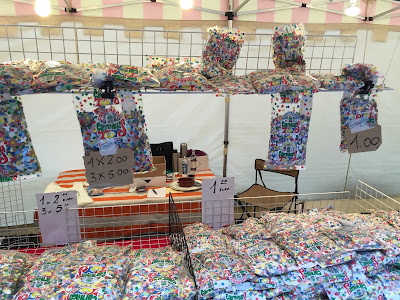
For days we kept wondering why there were little pieces of paper in the street. Finally, it became head-slapping obvious: it’s carnevale, the feast before Lent. Families buy bags of confetti, coriandoli, and celebrate in the piazze by throwing it into the air explaining why we kept seeing it in the street. Corandolo happens to also be the word for coriander (Coriandrum sativum), which led to some confusion initially when people tried to explain carneval to us. We keep imagining people throwing coriander seeds. However, according to Trecanni.it, coriandolo also refers to confections topped with coriander seeds, and by extension, confetti that resembles the confection. So we weren’t too far off.
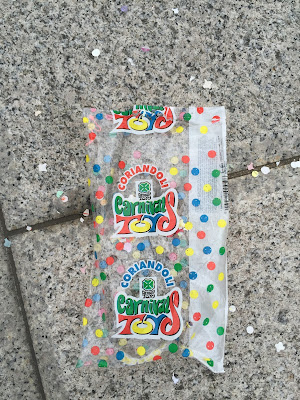
coriandoli (confetti) in Bergamocoriandoli (confetti) in Bergamo on salecoriandoli (confetti) in Bergamo il sentierone

coglioni di mulo – “mule balls”
During carnevale, vendor stalls or bancarelle spring up along the Il Sentierone in Bergamo. One of them was selling products from Norcia in Umbria. Palle di nonno or “grandpa’s balls” and coglioni di mulo are typical of the Norcia area. The common names refer to their shape. They taste good.
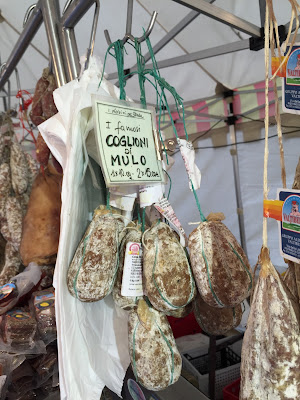
coglioni di mulo

chiave da accordare – “tuning key”
The verb accordare means to tune, in the musical sense. And, a chiave is a key. We saw this description in the Museo donizettiano in the Città Alta. Gaetano Donizetti is a famous Italian composer who was born and raised in Bergamo. If I read the sign at the museum correctly, he lived in the building that now houses the museum.
chiave da accordare - tuning key

polenteria – “place of polenta”
Polentone serves take-away polenta. Polenta is very common in this part of Italy, appearing on almost every menu you'll see. “eria” is used commonly in shop titles, like erboristeria, pasticceria, pizzeria, and tabaccheria. Eria is equivalent to ery in English, and usually means the trade or craft of an object or service or a place you can get that object or service.
polenteria

polentine mignon – “miniature polentas”
Confections called polenta e osei are a common sight around Bergamo. They look like a small mound of polenta with a decoration on top. The ones we tried at La Marianna in Borgo S. Caterina were very sweet. Osei comes from oṡèi, a Venetian word meaning birds. It turns out that the confections resemble the traditional dish polenta e osei of Venezia, Brescia and Bergamo, which consists of a mound of polenta with cooked birds on top. Birds as in the kind that might be flying about the yard like sparrows. (I heard that this dish is not legal to serve anymore.) After learning about the connection between the confections and the more macabre savory dish, I could easy see the little birds in the sweet versions as shown in these examples photographed at Il Fornaio and Nessi in Città Alta.
polentine mignon - polenta e osei Polent e oseiPolent e osei

l’arte in un espresso – “the art in an espresso”
This phrase is a flyer for the Bugan Coffee Lab, one of the places in Bergamo (that we’ve discovered so far) that stands out in terms of coffee. The Coffee Lab is serious about coffee and it is always a pleasure to drop by. Other spots for coffee we recommend are L’Arte Caffè and La Chicca. These three places satisfy our afternoon coffee indulgences. We take our morning coffee without fail at Caffè Papavero, because it’s good coffee, fun company, and in our neighborhood, so we can catch up the news of the day.
l’arte in un espresso

io sono la porta – “I am the gate”
Reminds me of the current exhibition running in Bergamo, Io sono il sarto – “I am the tailor,” which deals with the work of the artist Giovanni Battista Moroni, the 15th century artist who created penetrating portraits of people from Bergamo. The title of the exhibition takes its name from one of his best known paintings, Il Sarto. Io sono la porta is a quote from the bible, John 10. This gate or door is on the side of the Basilica di Santa Maria Maggiore.
io sono la porta

in questa piazzetta è vietato qualsiasi rumore molesto – “No loud noises in this (small) piazza”
This sign is in the piazzetta Manzù at the entrance of the charming Osteria al Vecchio Tagliere. In the piazzetta, there is a large mural ‘Busto di Ingo’ allo specchio inspired by the Giacomo Manzù sculpture ‘Busto di Inge’. The mural depicts Inge, Manzù’s wife, reaching her arms up over her head, threatening noise makers. Manzù was born in one of the houses surrounding the piazzetta.

Sunday, February 14, 2016

Passo San Pellegrino and Baita dei Cacciatori

Left: Postcard of Baita dei Cacciatori, m. 1790. Right: Trail we took starting from Colmean.
Postcard of Baita dei Cacciatori, m. 1790Trail we took starting from Colmean

The last time we were in the Dolomites it was June 2008 and we had 10 days of glorious hiking in Alta Badia. So, when friends invited us along on a ski weekend in the Bellunese Dolomites, we figured “why not?” It was our first time skiing this season and our first time skiing in Europe. Add to that a recent broken fifth metatarsal , and the fact we aren’t fantastic skiers to begin with, and you could say we were a little nervous about how we would do.

We spent Saturday skiing at Passo San Pellegrino, that night at the Piccola Baita in Falcade, and the following day hiking up to Baita dei Cacciatori just under the Cima d’Auta group (Catena dell'Auta). We walked to the Baita under snowfall. Once inside the baita (or cabin) we hung our jackets by the stove (stua), ate a delicious lunch followed by a strudel like no other we’ve tasted, and took a bit of grappa before starting back down. A beautiful day where we hike to eat.

How did we do skiing? Just fine after a few runs. We rented boots, skies, and helmets for 45 euros for both of us together, which seemed like a deal compared to what we were used to paying in Washington State. The hike on Sunday was about 8 km roundtrip from Bar Colmean to the Baita. After the hike, we drove back to Bergamo listening to Vinicio Capossela (Che cosse’ l’amor) and Fabrizio de Andrè (Andrea).

Lunch at Baita dei Cacciatori and strudel (one of the best we’ve tasted).Lunch at Baita dei Cacciatori Baita dei Cacciatori Strudel

Left: Christmas tree outside of Baita dei Cacciatori; Center: Nativity scene along sentiero 689. Right: Staring up at larch trees (Larix decidua).


Sentiero 689 (Valle del Biois Cima D’Auta Group).
Sentiero 689 (Valle del Biois Cima D’Auto Group)Sentiero 689 (Valle del Biois Cima D’Auto Group)Sentiero 689 (Valle del Biois Cima D’Auto Group)

Left: Skiing on Passo San Pellegrino. Right: View from Passo San Pellegrino (Col Margherita) toward the Pale di San Martino, the southernmost of the big Dolomite Groups including Cima della Vezzana.
Skiing on Passo San PellegrinoView from Passo San Pellegrino (Col Margherita) toward the Pale di San Martino

Left: Wood stacked on Sentiero 689 below Baita dei Cacciatori. Right: Canederli at Passo San Pellegrino.
Wood stacked on Sentiero 689 below Baita dei CacciatoriCanederli at Passo San Pellegrino

Thursday, February 11, 2016

Almenno San Salvatore to Monte Linzone Hike

Top: View north from Monte Linzone over Valle Imagna. Bottom Left: Route from Almenno to Monte Linzone. Bottom Right: View from trail 517 toward Bergamo.View north from Monte Linzone over Valle ImagnaRoute from Almenno to Monte LinzoneView from trail 517 toward Bergamo

Length: ~ 18 km
Duration: ~ 4 hours walking, plus 1.5 hours for lunch.
Elevation: Almenno San Salvatore starting elevation: 328m; Monte Linzone ending elevation: 1392m. 1064m gain.
Location: Valle Imagna, Province of Bergamo, Italy

We just finished up our test d’ingressso - entrance exam – for determining our Italian level for the University of Bergamo CIS – Italian for Foreigners and we needed to unwind from days of cramming brushing up on our Italian. As we walked to the main bus station, we compared notes on how we did on the exam. Horribly, we both concluded.

From the Bergamo train station, we took a bus (see arriva.it) from Bergamo to Almenno San Salvatore. We exited the bus and started hiking at 11:30. We broke for lunch around 13:00 at the restaurant Belvedere (via San Bernardo 7) in Roncola. With full bellies, we started walking again around 15:00 and reached Monte Linzone within 45 minutes. We ended back at Almenno San Salvatore at 18:45.

Belvedere in Roncola is a restaurant that can seat hundreds, but today, off season, it’s just us and a couple of locals eating in the small bar area. As we are chatting with the owner, he uses per quello several times reminding me of one of the questions I missed on the exam that required the correct preposition before quello. Too bad we hadn’t done the hike before the exam.

If you are just interested in the view from Monte Linzone, you can start in Roncola. We opted for more of a workout by starting in Almenno San Salvatore and following the first part of sentiero 571. The trail takes you along the ridge between Val San Martino (to the south) and Valle Imagna (to the north), through Roncola and on to Monte Linzone. Of course, 571 continues on much further.

Left: Primula vulgaris [Primulaceae] – yellow and Hepatica nobilis [Ranunculaceae] - purple. Right: Bellis.


Helleborus foetidus along sentiero 571.
Helleborus foetidus along sentiero 571Helleborus foetidus along sentiero 571

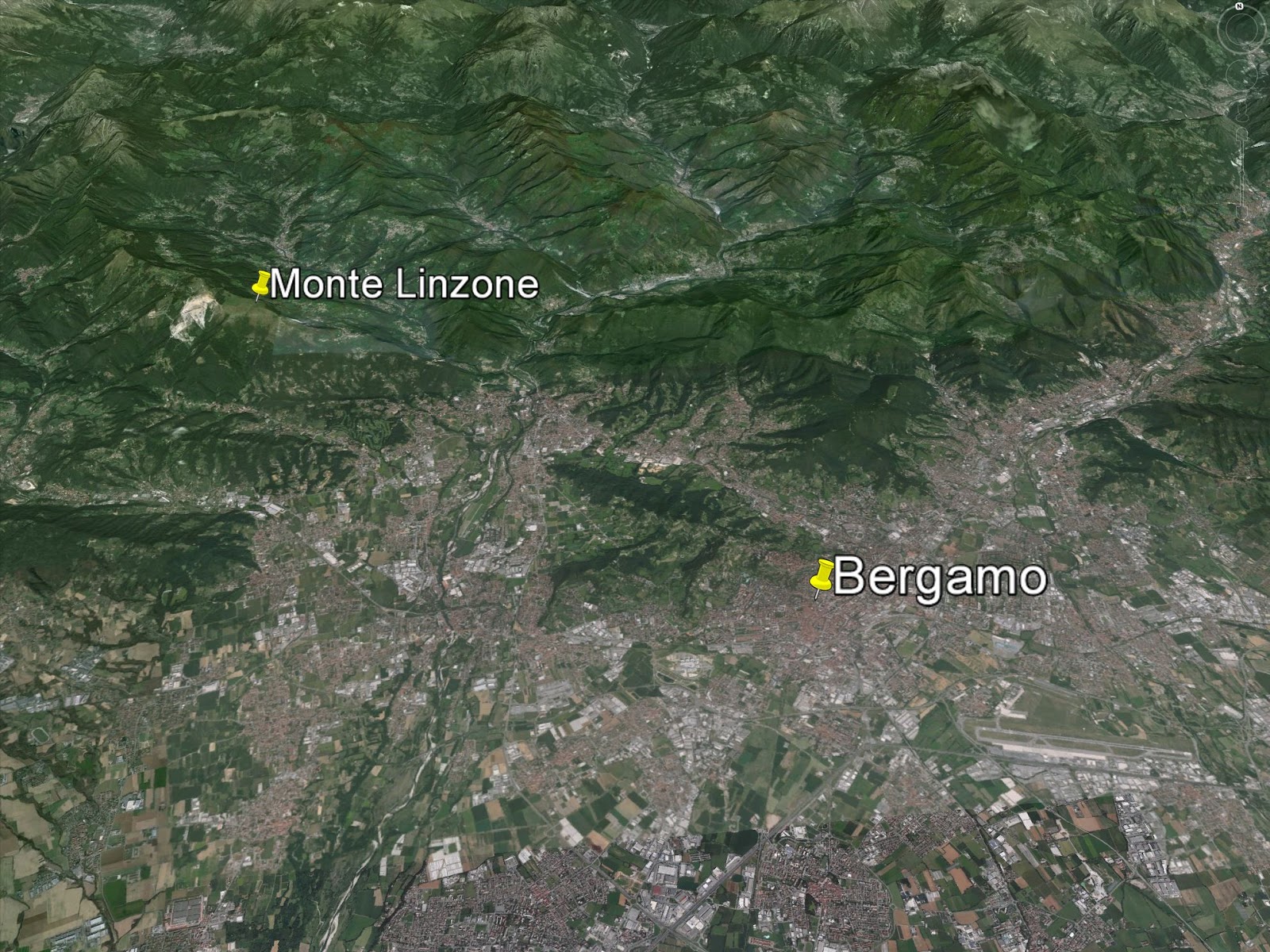
Left: Relation of Monte Linzone to Bergamo. Right: Near the part of the sentiero 571 called Corno Rocchetto with Bergamo in the distant background.
Relation of Monte Linzone to BergamoNear the part of the sentiero 571 called Corno Rocchetto with Bergamo in the distant background


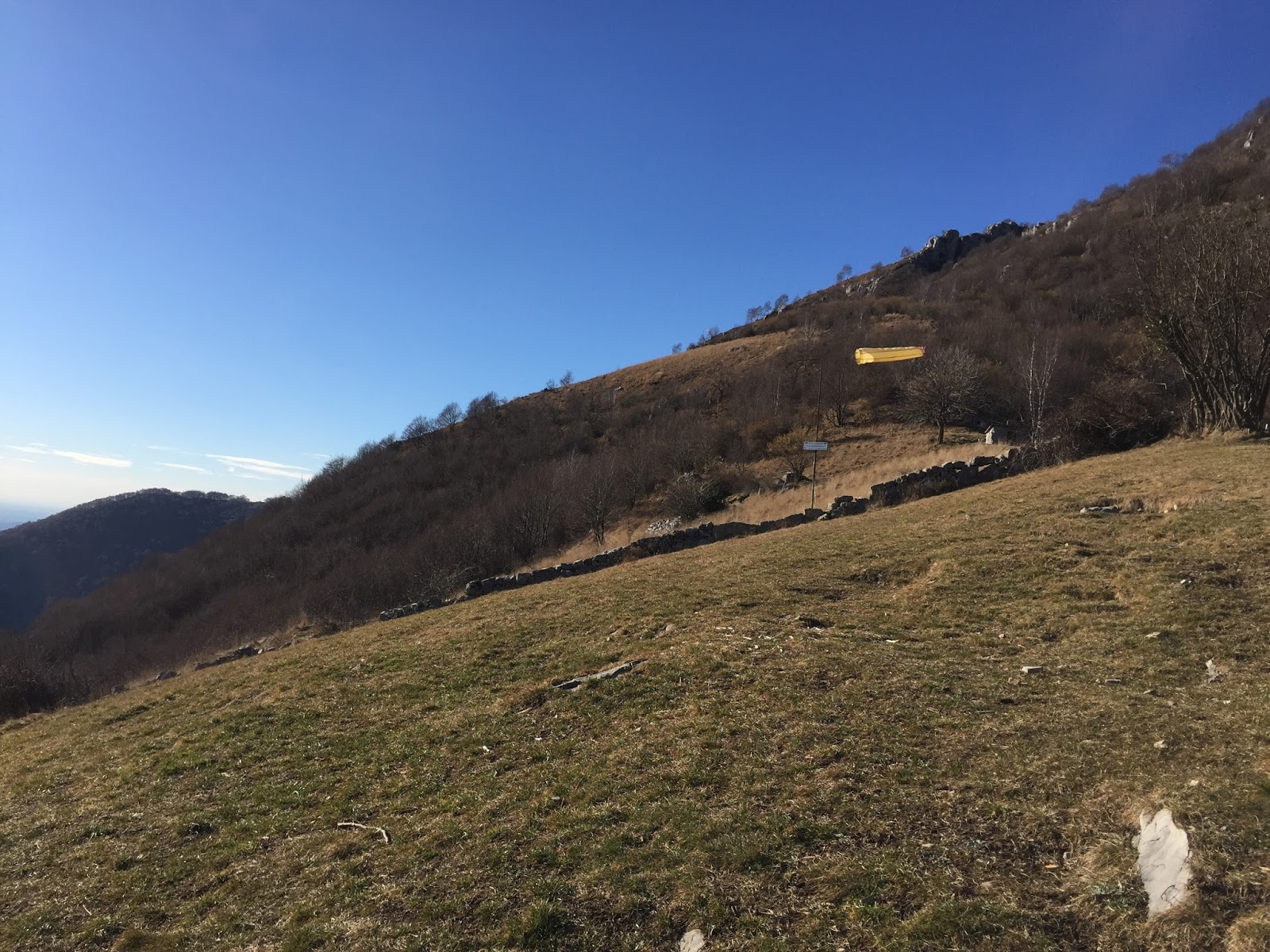
Left: A plate of pasta in Roncola at Belvedere; Right: The trail above Roncola and a paragliding launch site.
A plate of pasta in Roncola at BelevedereThe trail above Roncola and a paraglider launch site

Views of trail 571.
View of trail (sentiero) 571View of trail (sentiero) 571View of trail (sentiero) 571View of trail (sentiero) 571View of trail (sentiero) 571View of trail (sentiero) 571

Left: View toward Monte Linzone. Right: View back over the Po River Valley toward the southwest. A glider climbing on the currents.
View toward Monte LinzoneView back over the Po River Valley toward the southwest. A glider climbing on the currents.

View from the flanks of Monte Linzone toward Resegnone.
View from flanks for Linzone toward Resegnone

Signage for 517, Sentiero Alto di Valle with elevations.
Signage for 517, Sentiero Alto di Valle with elevations.Signage for 517, Sentiero Alto di Valle with elevations.